

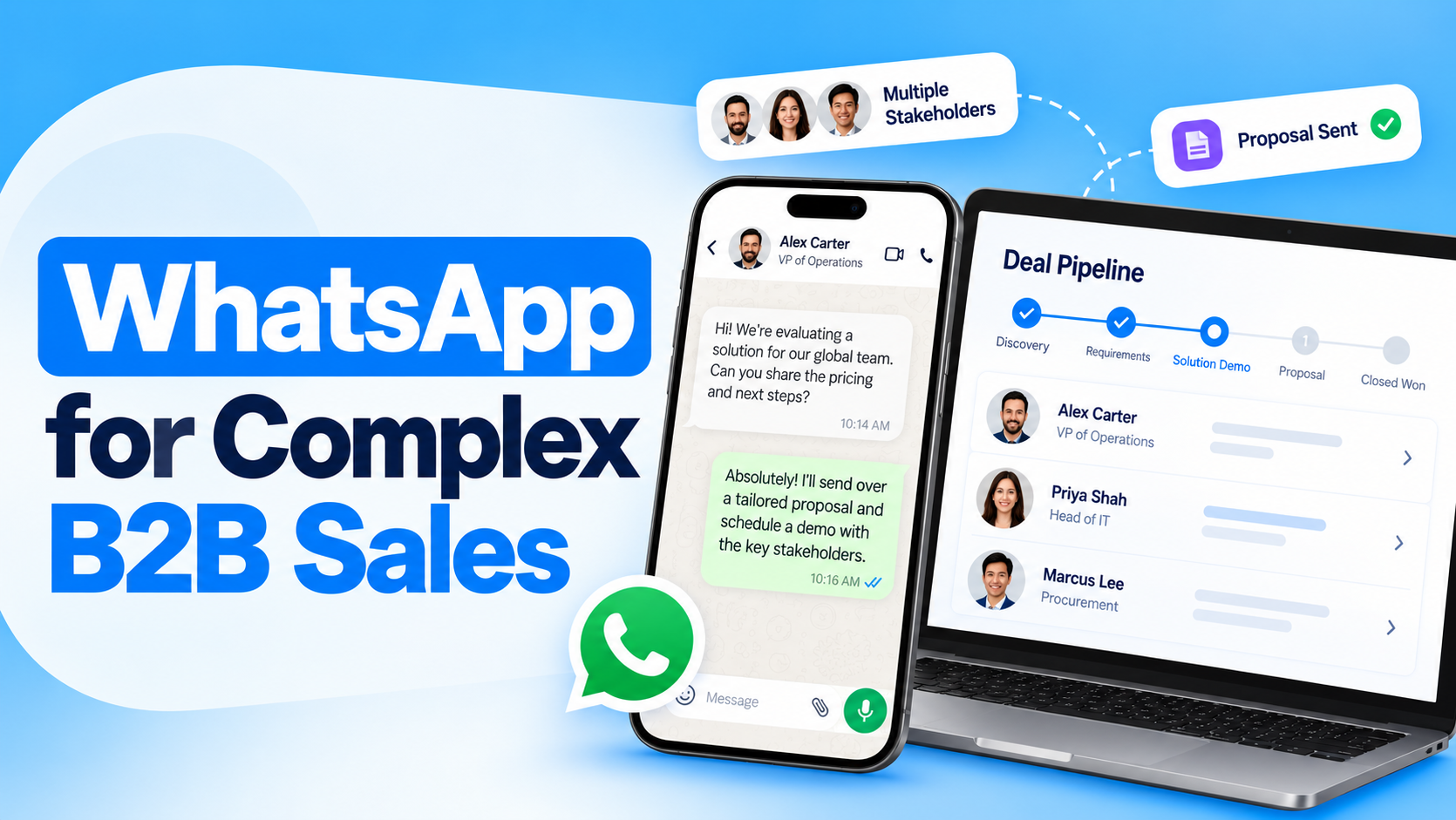
Complex B2B sales rarely close in one conversation. A prospect may first ask for information, then involve other stakeholders, request a demo, compare vendors, review pricing, raise objections and return weeks later before making a decision.
WhatsApp can help sales teams keep these conversations moving without replacing the CRM, proposal process or salesperson. Its role is to reduce communication friction, support follow-ups and maintain momentum across a long sales cycle.
Quick Answer
WhatsApp is useful in complex B2B sales when it is used as a conversation and follow-up layer around an existing sales process.
It can help with:
Lead qualification
Demo coordination
Stakeholder communication
Follow-ups
Deal nurturing
Re-engagement
Sales handoffs
The key is to connect WhatsApp conversations with the broader B2B sales workflow instead of treating every chat as an isolated interaction.
Where WhatsApp Fits in a Complex B2B Sales Cycle
A complex B2B deal usually moves through several stages. WhatsApp can support each stage differently.
Initial enquiry: Understand the prospect’s requirement and business context.
Qualification: Collect information such as company size, use case, timeline and buying intent.
Demo coordination: Confirm meeting slots, reminders and attendance.
Post-demo follow-up: Continue conversations while the discussion is still fresh.
Proposal stage: Confirm receipt and answer quick questions.
Negotiation: Handle short clarifications without creating unnecessary meetings.
Decision stage: Stay available while the buyer discusses the solution internally.
Re-engagement: Restart conversations with opportunities that have gone inactive.
For structured qualification, WhatsApp Flows for B2B lead qualification can help collect key information before the opportunity reaches the salesperson.
Why WhatsApp Works Well for Long B2B Sales Cycles
The biggest challenge in complex sales is often not generating the lead. It is maintaining momentum over several weeks or months.
WhatsApp can help because it makes communication easier between major sales events.
Faster clarification: Prospects can ask short questions without scheduling another call.
Better continuity: Previous conversations remain available for reference.
Lower follow-up friction: Salespeople can continue the conversation naturally.
Quicker coordination: Meetings, documents and next steps can be confirmed faster.
More frequent touchpoints: Sales teams can maintain contact without relying only on email.
This makes WhatsApp especially useful in B2B sales where buyers need multiple conversations before making a decision.
How WhatsApp Supports Multi-Stakeholder Deals
In many B2B purchases, the first person who enquires is not the final decision-maker.
The buying process may involve:
Department heads
Business owners
Procurement teams
Finance teams
Technical evaluators
End users
WhatsApp can help the salesperson keep the primary contact engaged while additional stakeholders enter the buying process.
Useful activities include:
Sharing short product information
Coordinating stakeholder meetings
Answering quick commercial questions
Following up after internal discussions
Confirming documentation requirements
Keeping the opportunity active between formal meetings
However, important deal information should still be recorded in the CRM rather than remaining only inside chat.
How WhatsApp Can Improve B2B Lead Nurturing
Not every qualified lead is ready to buy immediately. Some prospects need weeks of internal discussion before moving forward.
This is where structured nurturing becomes useful.
A B2B nurture sequence may include:
Demo follow-up
Case study sharing
Product updates
Reminder messages
Objection handling
Meeting follow-ups
Re-engagement after inactivity
For longer sales journeys, WhatsApp drip campaigns for multi-touch nurture journeys can help sales teams maintain consistent communication without relying entirely on manual follow-ups.
The objective is not to send more messages.
It is to send relevant messages based on where the prospect is in the buying journey.
Where Automation Helps in Complex B2B Sales
Automation can support B2B sales, but it should handle operational tasks rather than complex negotiations.
Useful automation can include:
Collecting qualification data
Assigning leads
Sending meeting confirmations
Creating follow-up reminders
Triggering nurture sequences
Re-engaging inactive prospects
Routing high-intent leads to salespeople
A practical workflow can look like:
New Enquiry → Qualification → Sales Assignment → Demo → Follow-Up → Nurture → Human Sales Conversation
This keeps automation focused on repetitive steps while leaving high-value discussions to the sales team.
For follow-up execution, automated WhatsApp sales follow-up can help teams maintain consistency across longer deal cycles.
Why Human Handoff Still Matters
Complex B2B deals often involve pricing, custom requirements, integration questions, negotiations and internal approvals.
These conversations usually require human judgement.
Automation may identify the requirement or collect initial information, but the system should know when to move the conversation to a salesperson.
A good handoff should provide the salesperson with:
Prospect details
Qualification data
Previous conversation context
Product interest
Current sales stage
Important questions already asked
This avoids forcing the customer to repeat information and makes the transition from automation to sales smoother.
For teams using AI-assisted conversations, human-AI WhatsApp handoff design is particularly relevant.
What Should Not Be Managed Only on WhatsApp?
WhatsApp can support the sales cycle, but it should not become the entire sales system.
Some activities still belong in formal tools.
Proposals: Use proper proposal or document systems.
Contracts: Keep legal agreements in appropriate signing platforms.
Pipeline management: Record opportunity stages in the CRM.
Commercial approvals: Document pricing and approval decisions formally.
Sensitive information: Follow the organisation’s security and compliance process.
WhatsApp should make conversations faster, while other systems maintain structure and accountability.
What Does a Strong B2B WhatsApp Workflow Look Like?
A simple structure is often enough:
Lead enters through WhatsApp
Qualification data is collected
Prospect is assigned to sales
Demo is scheduled
Follow-up is created
Opportunity enters nurture if required
Human salesperson manages important conversations
Deal stage is updated in the CRM
Inactive opportunities are re-engaged
The goal is not to move the entire B2B sales process into WhatsApp.
The goal is to make the sales process more responsive.
WhatsApp Should Support the Sales Process, Not Replace It
For complex B2B sales, WhatsApp works best when it supports a structured sales journey.
It can help teams:
Respond faster
Maintain deal momentum
Improve lead qualification
Coordinate stakeholders
Follow up consistently
Re-engage inactive opportunities
But successful B2B selling still depends on clear qualification, strong sales ownership, proper CRM management and human judgement.
Used correctly, WhatsApp becomes an important part of the sales workflow rather than just another messaging channel.