

If you've been researching WhatsApp Business API providers, you've probably come across Sinch. It's one of the bigger names in the space, and for good reason, but "big name" doesn't automatically mean "right fit for your business."
Here's a straightforward breakdown of what the Sinch WhatsApp API actually is, how it works, and what to weigh before signing up.
What Is the Sinch WhatsApp API?
Sinch is a global communications platform that acts as a Meta Business Solution Provider (BSP) — basically, a company that's been vetted and approved by Meta to give businesses access to the official WhatsApp Business API. Rather than messaging manually through the WhatsApp app, businesses use Sinch's infrastructure to send and receive messages programmatically, connecting WhatsApp to their existing CRM, support desk, or marketing stack.
Sinch isn't WhatsApp-only, either. It's better known as a broader communications provider offering SMS, voice, and email APIs alongside WhatsApp, which makes it a common pick for larger companies that want one vendor across multiple channels rather than juggling separate providers.
What Does the Sinch WhatsApp API Cost?
Pricing for the Sinch WhatsApp API can be a little difficult to pin down because there are two costs to consider.
First, Meta charges businesses for delivered message templates. The rate depends on the type of message, such as marketing, utility, or authentication, as well as the country you're sending to.
Then there is Sinch's own processing fee for handling WhatsApp messages. So, your final cost is made up of both the Meta messaging charge and Sinch's fee.
There isn't one fixed price that applies to every business. Your total cost will depend on factors such as message volume, message category, and the countries you're sending messages to.
If you're comparing Sinch with other WhatsApp API providers, make sure you ask for a clear breakdown of both costs. Looking at only the provider's fee can make one option appear cheaper when the actual cost may be higher.
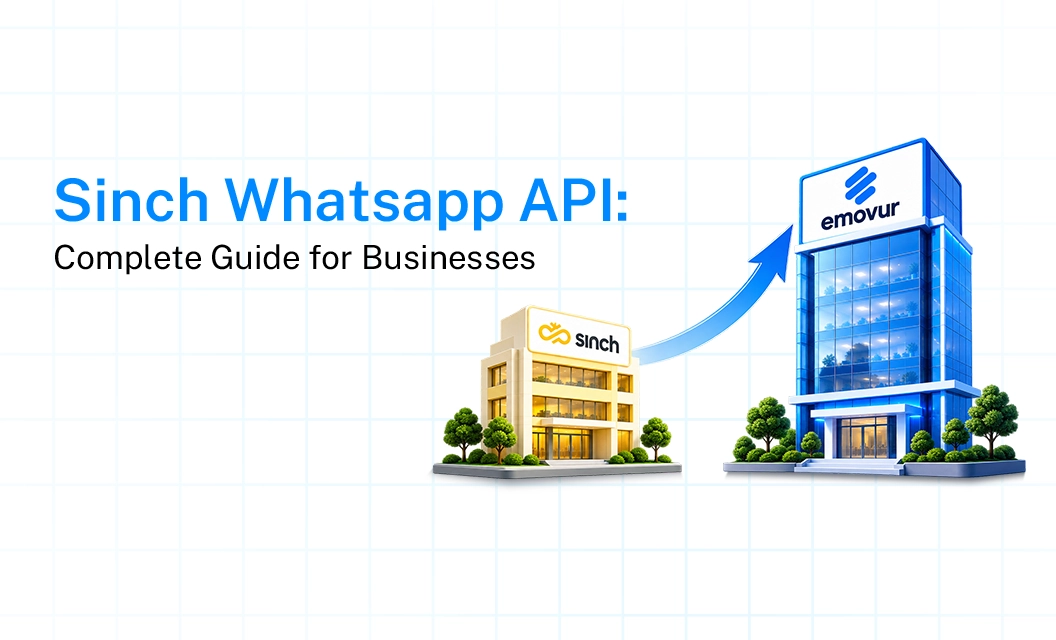
Sinch WhatsApp API vs Emovur
Both give you access to the official WhatsApp Business API, but they're built for different kinds of buyers. Here's how they stack up:
In short: if you're already deep in Sinch's ecosystem for SMS or voice, keeping WhatsApp there simplifies billing and account management.
If WhatsApp is your main channel and you want simpler pricing with a platform built around it specifically, Emovur is the more focused option.
Conclusion
The Sinch WhatsApp API is a solid, enterprise-grade option — especially if you're already inside its ecosystem for other channels. But for businesses that want a WhatsApp-first platform with transparent pricing and quicker setup, it's worth putting alternatives side by side first.
FAQs
Is Sinch a Meta-approved WhatsApp provider?
Yes, Sinch is an official Meta Business Solution Provider, which means it has direct, approved access to the WhatsApp Business API.
How is the Sinch WhatsApp API priced?
It's usage-based: Meta charges per delivered message template based on category and market, and Sinch adds its own processing fee on top for inbound and outbound messages.
Does Sinch only offer WhatsApp?
No. Sinch is a broader communications platform offering SMS, voice, email, and WhatsApp APIs, which is part of why larger, multi-channel businesses often choose it.
Is Sinch a good fit for small businesses?
It can work, but its pricing and setup are generally geared toward larger, multi-channel operations. Smaller or WhatsApp-first businesses may find simpler, more transparent alternatives easier to get started with.
Still confused, who is best fit for your business? Explore Emovur’s Pricing see if its your right choice.
Related guides:
Emovur v/s Wati v/s Aisensy v/s Interakt: pricing comapred
WhatsApp Business API v/s RCS: Which channel to choose
Best whatsApp Business API providers in India
WhatsAPP API free Trial: 12 things to choose a provider