

INTRODUCTION:
During a free trial of the WhatsApp API, what exactly should you confirm before making a decision?
You should be able to do more with the WhatsApp API free trial than just send a few test messages. This is your chance to assess a provider's ability to handle all aspects of your real business process, such as message delivery, templates, automation, team access, integrations, analytics, and support. Test the features you will rely on once the trial is over before committing to a service. You should be able to respond to one question with a helpful trial:
Can my business's customer communications be handled by this WhatsApp API provider in a reliable manner?
What should you test during a WhatsApp API free trial?
Instead of solely evaluating a provider by its dashboard or promotional features, test the complete customer communication journey.
1. Test how easy the API setup is
The first test is the onboarding process itself. Find out how quickly you can connect your WhatsApp Business account, configure the number and start sending approved messages.
Pay attention to whether the provider clearly explains each step or requires repeated support intervention. A complicated setup may become a bigger problem when you add more numbers, users or integrations.
2.Test actual message delivery
Sending a message successfully from the dashboard does not necessarily tell you enough. Test messages across different scenarios and check whether delivery, read and failure statuses are reported accurately.
Try transactional and customer-service use cases rather than sending only a promotional test. Look for clear status information and whether failed messages provide enough information to troubleshoot the issue.
3. Test WhatsApp message templates:
Templates are an important part of WhatsApp Business messaging. During the trial, create and test templates relevant to your business.
For example, an e-commerce company could test:
Order confirmation
Payment confirmation
Shipping update
Delivery notification
Customer follow-up
Check how easily templates can be created, submitted, organized and reused. Also see whether the provider makes template status and rejection information easy to understand.
4. Test automation with a real customer journey:
Do not test automation with an isolated “Hello World” message. Build one workflow that resembles what your business actually needs.
For example:
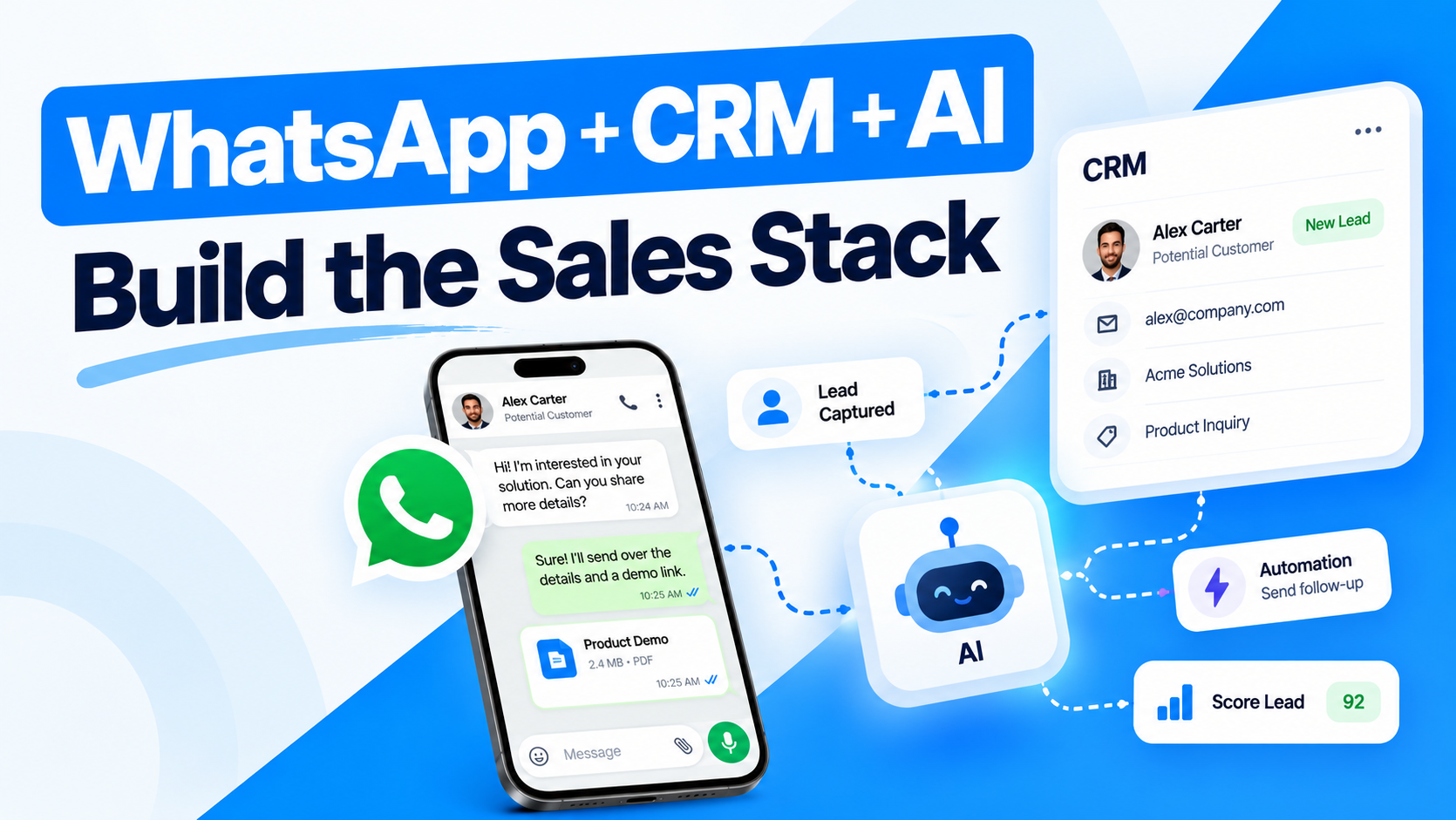
Customer submits enquiry → WhatsApp message is triggered → sales team receives the conversation → customer replies → agent continues the conversation.
This reveals whether the provider can support an end-to-end workflow instead of simply sending individual messages.
5. Test the shared team inbox
If several employees handle WhatsApp conversations, test how conversations move between agents.
Check whether users can:
Assign conversations
See conversation history
Respond from a shared number
Identify the responsible agent
Add internal notes
Manage multiple conversations simultaneously
A provider may offer WhatsApp API access but still provide a weak experience for teams. This distinction matters if WhatsApp is part of your sales or support process.
6. Test CRM and integration capabilities:
If your business already uses a CRM, test the integration before choosing a provider.
For example, check whether a new WhatsApp inquiry can be connected to an existing customer record and whether conversations can trigger CRM actions.
Also evaluate the API documentation. Developers should be able to understand authentication, endpoints, webhooks, request formats, and error responses without relying entirely on provider support.
7. Test analytics and reporting:
Always look for delivery, read, and response-rate reporting available in real time, and whether it breaks down by template or campaign, not just an aggregate number.
Ask whether the reporting is actionable. If the dashboard only shows numbers without helping you identify problems or opportunities, its practical value may be limited.
8. Test contact and audience management:
Import a small sample of real or test contacts and evaluate how easily you can organize them.
Check whether you can segment customers, manage contact information, and avoid accidentally messaging people who should not receive a particular communication.
The objective is not simply to see whether contacts can be uploaded. You want to understand whether the provider can support your day-to-day customer management process.
9. Test opt-in and compliance controls:
A good free WhatsApp Business API trial should also help you understand how the provider handles responsible messaging.
Test how the platform records or supports customer opt-ins, manages templates and handles customer responses. Avoid providers that make bulk messaging appear to be a shortcut around WhatsApp's rules.
If you are evaluating messaging costs alongside compliance and functionality, explore our free WhatsApp API guide to understand what “free” API access does, and does not.
10. Test customer support before you need it:
Do not wait for a serious problem to evaluate support.
Raise a simple technical question during the trial and measure:
How quickly they respond
Whether the response actually solves the problem
Whether you need to repeat the issue
Whether technical questions are handled by knowledgeable staff
This is particularly important for the WhatsApp API because problems involving verification, templates, numbers or integrations can directly affect customer communication.
11. Test the actual cost after the trial
Do not choose a provider simply because the trial is free.
Calculate what you are likely to pay once the trial ends, including provider fees, WhatsApp messaging charges, subscription costs, additional users, integrations, and other applicable charges.
Compare the provider's pricing model with your expected messaging volume and use cases. You can use Emovur WhatsApp API pricing page as a reference point when evaluating your expected costs.
What should you do before choosing a WhatsApp API provider?
Before committing, send representative messages, build one real workflow, test your team's daily experience, connect a relevant integration, and ask support for a technical question. Then compare the total cost and limitations of each provider.
Most importantly, distinguish between “the platform has the feature” and “the feature works well for our business.” A provider can have an impressive feature list while still creating friction in setup, automation, support or everyday team operations.
If you want to see how the platform works before starting, you can book a WhatsApp API demo with Emovur and evaluate the workflow with your own requirements.
What Most Free Trials Don't Let You Test.
A standard WhatsApp API trial can help you test basic features, but it may not show the full picture. Three areas are often difficult to evaluate during a short trial:
Real-world performance: Trial accounts may have message limits, so you may not see how the platform performs at your actual business volume.
Actual messaging costs: Some trials use credits or limited billing models, so your trial costs may not reflect what you will pay after going live.
Long-term support: One support request is not enough to judge how quickly and effectively the provider handles ongoing technical issues.
Note: If these factors are important to your business, ask the provider for a paid pilot or extended trial before making your final decision.
Conclusion:
A WhatsApp API free trial is most valuable when you treat it like a real-world evaluation rather than a product tour. Test the 12 areas that will affect your daily operations: setup, delivery, templates, automation, team collaboration, integrations, analytics, contacts, compliance, support, limits, and pricing. The right provider should not simply help you send your first WhatsApp message, but they should give your team a reliable way to manage customer communication as usage grows.
Ready to see it in action first? Explore Emovur's WhatsApp Business API or start your trial today.