

Looking for a Free WhatsApp API? Here's What You Should Know
Businesses are increasingly using WhatsApp to automate customer communication, provide instant support, send transactional notifications, and generate qualified leads. As a result, searches for Free WhatsApp API have grown significantly.
However, one question continues to create confusion.
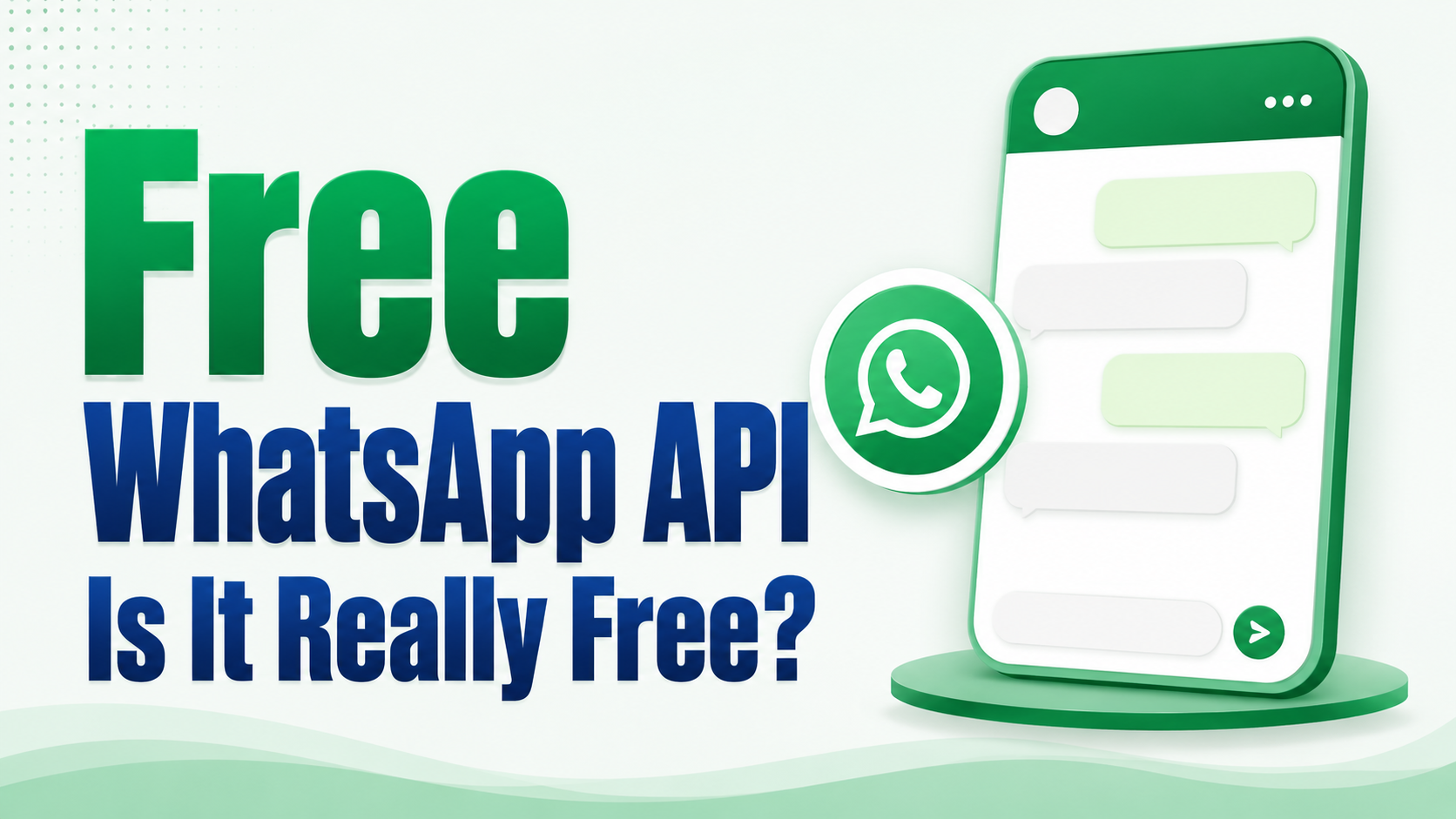
Is the WhatsApp API really free?
The answer is yes, but only if you understand what "free" actually means.
Meta allows businesses to access the WhatsApp Cloud API without paying for the API itself. However, businesses may still pay conversation charges, implementation costs, or platform fees depending on how they choose to deploy the API.
Many articles only explain the basics. This guide goes further by helping you understand the real costs, compare different WhatsApp solutions, avoid common mistakes, and decide which option fits your business.
Quick Answer
The Free WhatsApp API refers to Meta's WhatsApp Cloud API. Access to the API is free, but messaging charges and optional software costs may apply based on your usage.
Key Takeaways
Meta provides free access to the WhatsApp Cloud API.
The API is different from the WhatsApp Business App.
Businesses usually pay for conversations, not API access.
You can connect directly with Meta or through a Business Solution Provider (BSP).
The right option depends on your business size, technical resources, and automation requirements.
Why Businesses Choose the Free WhatsApp API
More businesses are moving customer communication from email and SMS to WhatsApp because it offers faster response rates and a familiar messaging experience. However, many business owners are unsure whether WhatsApp API is free, how Meta's pricing works, or whether they need a Business Solution Provider. Understanding these differences can help you choose the right solution and avoid unnecessary costs.
Who Should Use the Free WhatsApp API?
The Free WhatsApp API is suitable for businesses that want to automate customer communication, improve response times, and integrate WhatsApp with existing business systems. It is especially useful for:
A startup founder looking for a cost-effective customer communication channel.
An eCommerce business planning to automate order updates and customer support.
A healthcare provider sending appointment reminders and patient notifications.
A SaaS company integrating WhatsApp into your product or CRM.
A marketing team exploring WhatsApp campaigns and automation.
A developer looking to integrate Meta's WhatsApp Cloud API.
A growing business comparing the Cloud API with Business Solution Providers.
Whether you're just getting started or planning a large-scale implementation, understanding how the API works will help you make the right investment.
What Is a Free WhatsApp API?
A Free WhatsApp API is an official interface provided by Meta that allows businesses to integrate WhatsApp with their websites, applications, CRMs, customer support platforms, and internal systems.
Unlike the WhatsApp Business App, the API is designed for businesses that need automation, scalability, and system integration.
Instead of manually replying to every customer, your business software communicates with WhatsApp through secure API requests.
WhatsApp Business App vs Free WhatsApp API
Many businesses confuse the WhatsApp Business App with the Free WhatsApp API because both are official WhatsApp solutions. However, they are designed for different business needs. The Business App is ideal for small teams handling conversations manually, while the WhatsApp API supports automation, integrations, and large-scale messaging.
Feature | WhatsApp Business App | Free WhatsApp API | |
Best For | Small businesses | Growing businesses & enterprises | |
Automation | Limited | Advanced | |
Multiple Users | No | Yes | |
CRM Integration | No | Yes | |
Chatbot Support | No | Yes | |
Bulk Notifications | Limited | Yes | |
API Access | No | Yes | |
Scalability | Low | High | |
Why Businesses Use the Free WhatsApp API
The API helps businesses move beyond one-to-one messaging and build automated communication workflows.
Some of the most common use cases include:
Order Notifications: Automatically inform customers when an order is confirmed, shipped, or delivered.
Customer Support: Route conversations to the right support team or chatbot without manual intervention.
Appointment Reminders: Send reminders to reduce missed appointments for healthcare, education, and service businesses.
OTP Verification: Deliver secure one-time passwords and login verification messages.
Lead Qualification: Capture enquiries from websites or advertisements and automatically collect important customer details.
Payment Updates: Notify customers about invoices, successful payments, subscription renewals, or failed transactions.
Marketing Campaigns: Engage opted-in customers with relevant promotional messages using approved templates.
How Does It Work?
The WhatsApp API connects your business application with Meta's servers.
A typical workflow looks like this:
A customer sends a message on WhatsApp.
Meta receives the message.
The message is forwarded to your application through the API.
Your CRM, chatbot, or support platform processes the request.
An automated or human response is sent back to the customer.
This process usually takes only a few seconds and enables businesses to deliver faster and more consistent customer experiences.
Key Features of the Free WhatsApp API
- Automated Messaging: Automatically send confirmations, reminders, and notifications.
Two-Way Communication: Allow customers to ask questions and receive responses.
CRM Integration: Connect conversations with customer data for better support.
Chatbot Support: Automate FAQs, lead qualification, and order tracking.
Rich Media Sharing: Send PDFs, images, videos, product catalogs, and interactive buttons.
Shared Team Inbox: Allow multiple agents to manage customer conversations.
Why Growing Businesses Prefer the API
As customer conversations increase, managing everything through the WhatsApp Business App becomes difficult.
The API offers features that support business growth, including:
Automation: Reduce repetitive manual work by automating common customer interactions.
Multiple Agents: Allow several team members to manage conversations from a shared inbox.
CRM Integration: Connect customer conversations with sales, marketing, and support systems.
Scalability: Handle thousands of conversations without changing communication channels.
Workflow Automation: Trigger messages based on customer actions, purchases, or support requests.
Is WhatsApp API Really Free?
The phrase "Free WhatsApp API" often leads to misunderstandings.
Many businesses expect unlimited messaging without any cost. In practice, the API itself is free to access, but messaging and implementation costs may still apply depending on how you use it.
Understanding this distinction will help you plan your budget more accurately.
What Is Free?
Meta includes several components at no additional cost.
API Access: Eligible businesses can access the WhatsApp Cloud API without paying a licensing fee.
Developer Documentation: Meta provides comprehensive documentation, SDKs, and implementation guides.
Sandbox Testing: Developers can build and test integrations before going live.
Webhooks: Receive real-time notifications whenever customers send messages.
Cloud Hosting: Meta hosts the Cloud API, eliminating the need to manage your own servers.
What May Cost Money?
Although API access is free, businesses should account for additional expenses that depend on their implementation.
A Simple Example
Imagine two businesses that each send 5,000 customer messages every month.
Business A has an in-house development team and integrates directly with Meta's Cloud API. It only pays the applicable conversation charges.
Business B chooses a Business Solution Provider that offers a shared inbox, chatbot builder, campaign management, and analytics. Along with Meta's conversation charges, it also pays a monthly subscription for these additional features.
Both businesses use the same WhatsApp infrastructure, but their total costs differ because of the tools they choose.
Myth vs Reality
By understanding these differences early, businesses can avoid unexpected expenses and choose the implementation model that best fits their requirements.
How to Get Free WhatsApp API
If you want to start using the Free WhatsApp API, you need a Meta Business account and access to the Meta Developer platform. The setup process is straightforward, but business verification and API configuration are required before sending messages at scale.
Create a Meta Business Account: Sign up for a Meta Business account if you don't already have one.
Verify Your Business: Complete Meta's business verification process to unlock production access.
Create a Developer App: Log in to the Meta Developer portal and create a new app.
Add the WhatsApp Product: Enable the WhatsApp product and connect your business phone number.
Generate an Access Token: Create temporary or permanent access tokens to authenticate API requests.
Configure Webhooks: Set up webhooks to receive incoming messages and delivery updates.
Test and Go Live: Send test messages, verify the integration, and switch to your production environment.
Conclusion
The Free WhatsApp API gives businesses a flexible way to automate customer communication, integrate WhatsApp with existing systems, and improve customer engagement. While API access is free, businesses should also consider conversation charges, implementation costs, and the level of automation they require.
Whether you integrate directly with Meta or choose a Business Solution Provider, selecting the right approach depends on your business goals, technical resources, and messaging requirements.
FAQs
1. Is WhatsApp API really free?
Yes, Meta provides free access to the WhatsApp Cloud API, allowing businesses to build and integrate messaging solutions without paying for API access. However, conversation-based messaging charges and optional third-party platform fees may apply depending on how you use the API.
2. Can I use the Free WhatsApp API without a Business Solution Provider (BSP)?
Yes. Businesses can integrate directly with Meta's WhatsApp Cloud API through the Meta Developer Portal. A Business Solution Provider (BSP) is optional and is mainly useful if you need features like a shared inbox, chatbot builder, analytics, or technical support.
3. What is the difference between WhatsApp Business App and WhatsApp API?
The WhatsApp Business App is designed for small businesses that manage conversations manually. The WhatsApp API is built for businesses that need automation, CRM integration, multiple users, chatbots, and high-volume messaging.
4. How can I get the Free WhatsApp API?
To get started, create a Meta Business Account, complete business verification, create a Meta Developer App, enable the WhatsApp product, generate an access token, configure webhooks, and test your integration before going live.
5. Does Meta charge a monthly fee for WhatsApp API?
No. Meta does not charge a monthly subscription fee for accessing the WhatsApp Cloud API. Instead, businesses pay conversation-based charges depending on the type of message and the recipient's country.
6. Can I send bulk WhatsApp messages using the Free WhatsApp API?
Yes, you can send bulk messages using the WhatsApp API, provided you follow Meta's messaging policies. Businesses must use approved message templates for outbound communication and ensure customers have opted in to receive messages.
7. Can I integrate WhatsApp API with my CRM?
Yes. The WhatsApp API can be integrated with popular CRM platforms such as Salesforce, HubSpot, Zoho CRM, Microsoft Dynamics, and custom CRM systems. This helps businesses manage customer conversations, automate workflows, and improve response times.
8. Which businesses should use the Free WhatsApp API?
The Free WhatsApp API is suitable for businesses that need to automate customer communication. It is commonly used by eCommerce stores, healthcare providers, educational institutions, financial services, SaaS companies, travel agencies, and customer support teams.
9. Is the WhatsApp API secure for business communication?
Yes. The WhatsApp API uses end-to-end encryption for personal messages and follows Meta's security standards. Businesses should also implement proper access controls, secure API credentials, and comply with applicable data privacy regulations when handling customer information.
10. What is the difference between WhatsApp Cloud API and WhatsApp Business API?
The WhatsApp Cloud API is the official cloud-hosted version of the WhatsApp Business API managed by Meta. It eliminates the need for businesses to host their own infrastructure, making implementation easier and reducing maintenance efforts.
Ready to Get Started?
If you're looking to implement the WhatsApp Business API without the complexity of managing everything yourself, Emovur can help. From Meta Cloud API integration and chatbot development to CRM connectivity and automation, our team helps businesses deploy scalable WhatsApp solutions tailored to their requirements.
TABLE OF CONTENTS