

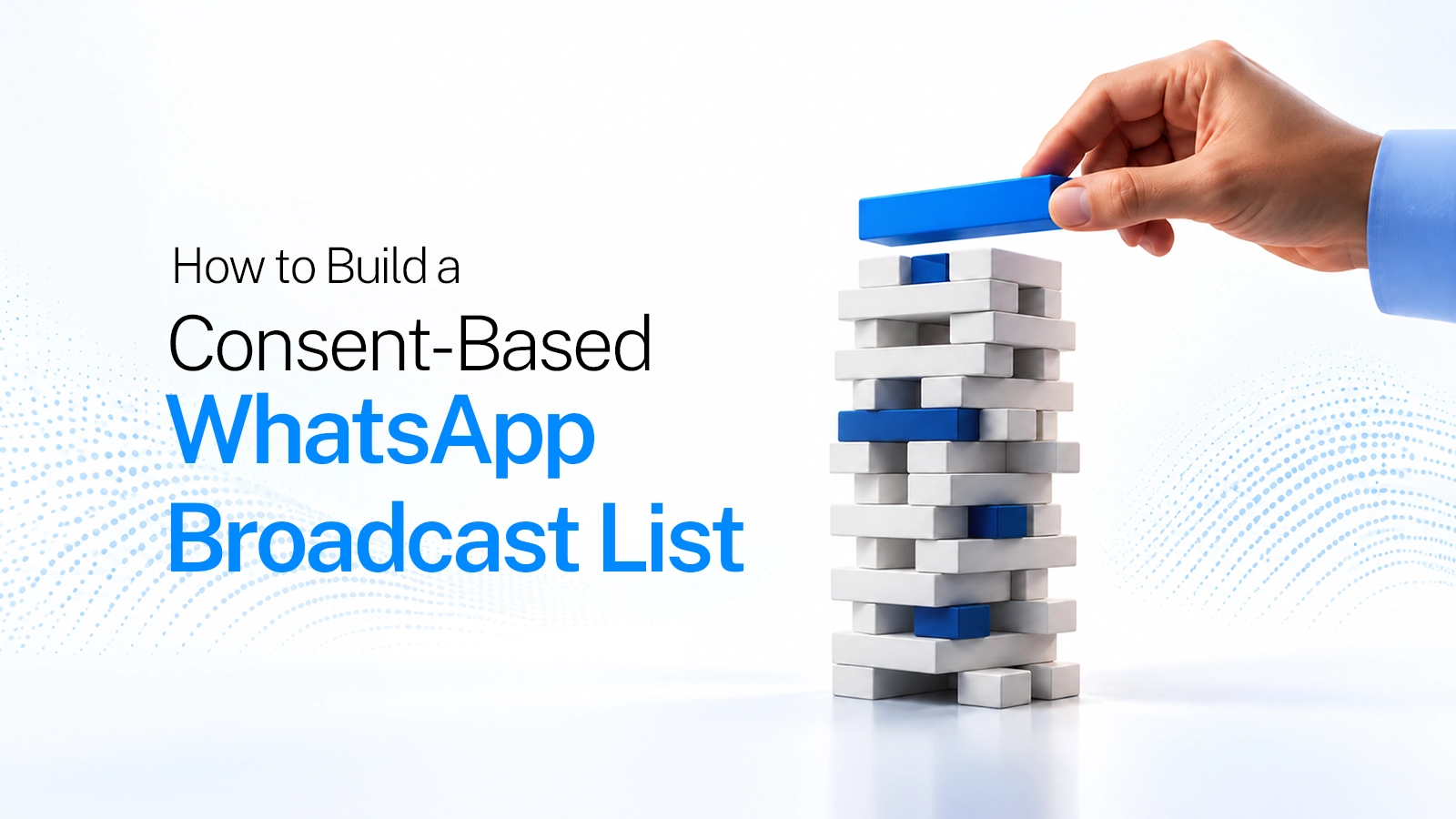
If you plan to send WhatsApp broadcasts, your list matters more than your message. A consent-based list is a list of people who said yes to hearing from your business on WhatsApp, and you can prove it.
This guide covers what Meta requires, what India's privacy law expects, and how to grow a list people actually want to be on.
Quick answer:
Ask clearly, name your business and say the messages will come on WhatsApp.
Ask for marketing permission separately from order updates.
Save proof of every opt-in.
Make opting out easy, and honour it fast.
What Meta Requires Before You Send a WhatsApp Broadcast
Meta says businesses must get opt-in before messaging people on WhatsApp. Having someone's phone number is not enough. The person must confirm they want to hear from your business.
Your opt-in must:
Clearly say the person agrees to get messages from you on WhatsApp
Clearly name your business
Follow the laws that apply to you
How you collect it is up to you, as long as it meets these points. Meta also rec
Do India's Privacy Rules Apply to Your WhatsApp List?
If you message people in India, plan for the DPDP Act. A phone number linked to a person is personal data.
The DPDP Rules were notified in November 2025. The main notice and consent duties come into full force in stages, by around May 2027. You do not need to wait. Building your list the right way now saves you rework later.
In simple terms, consent should be free, specific, informed and clear. That rules out:
Pre-ticked boxes
WhatsApp marketing hidden inside a general "I accept the terms" tick
Making someone agree to marketing just to place an order
Note: People must also be able to withdraw consent. This is general information, not legal advice. Check your setup with a legal advisor.
Where to Collect WhatsApp Opt-Ins and What Proof to Keep
A clean list grows when people see a reason to join. A few things that help:
Offer something specific: Restock alerts, early access, appointment reminders or order tracking work better than "get updates".
Ask for one thing at a time: Marketing consent and order updates are separate questions.
Send a welcome message right away: Repeat what they signed up for so nobody is surprised later.
Send your first broadcast soon: People forget they signed up if you wait weeks.
Let people choose: Topics or frequency options reduce opt-outs.
Clean the list often: Remove people who opted out or never responded.
What Does Not Count as Consent
Ready to Broadcast to a List That Wants to Hear From You?
A consent-based list gives you better replies, fewer blocks and a safer number. Check Emovur WhatsApp Business API pricing to see how broadcasts work.
FAQs
1. Is opt-in mandatory for WhatsApp broadcasts?
Yes. Meta requires businesses to get opt-in before messaging people on WhatsApp, and the opt-in must name your business and say messages will come on WhatsApp.
2. Can I message customers who gave me their number at checkout?
Only for what they agreed to. A number given for order updates is not permission for marketing. Add a separate WhatsApp marketing opt-in.
3. Can I upload an old contact list or buy one?
No. Without proof that each person agreed to hear from you on WhatsApp, the list is not consent-based. Ask people to opt in first.
4. Does the DPDP Act apply to WhatsApp broadcasts?
If you message people in India, plan for it. A phone number tied to a person is personal data, and the main consent duties come into full force by around May 2027. Check your setup with a legal advisor.
5. What should I do when someone says STOP?
Stop sending marketing messages to that person, mark the contact as opted out and keep a record of the date.
Related Reads:
WhatsApp API Compliance Checklist for Marketing Teams: Opt-In, Templates, Quality & Opt-Out
WhatsApp Marketing Messages: Rules, Examples, Templates & Compliance
TABLE OF CONTENTS