

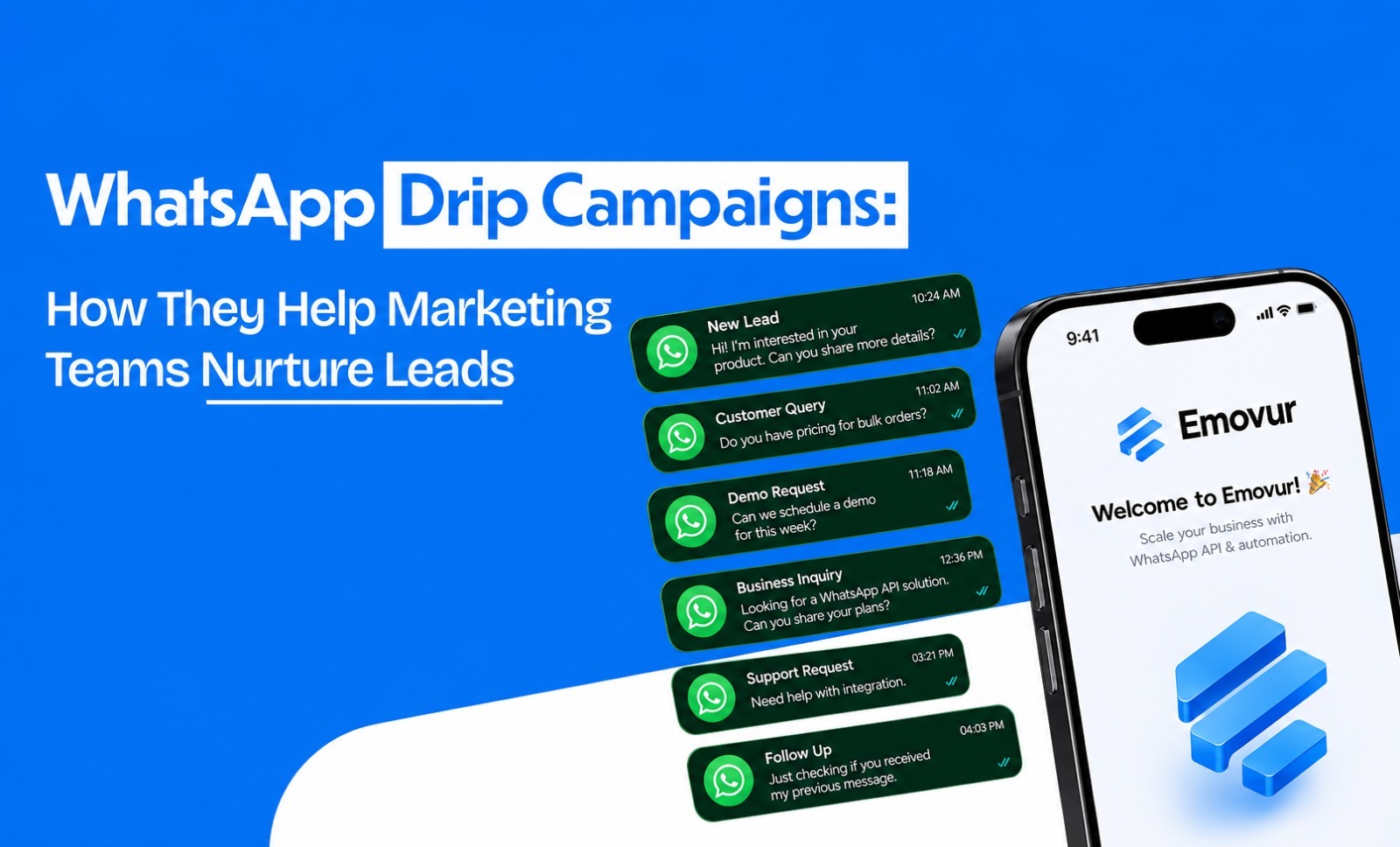
WhatsApp drip campaigns are automated, which acts upon the leads based on their stage or behaviour, instead of relying on a marketing team to remember who needs a reply and when. For marketing teams juggling dozens or hundreds of leads a week, that difference decides whether a lead converts or quietly goes cold.
If your team generates leads faster than it can follow up with them, this is worth five minutes.
Why Manual Lead Follow-Up Breaks Down for Marketing Teams
Most lead leakage doesn't happen because a lead was uninterested. It happens because nobody followed up in time.
Common failure points in manual follow-up:
A rep gets busy and the lead sits untouched for days.
A broadcast goes out once, gets a partial response, and the rest of the list never hears back.
Leads pile up in a spreadsheet or CRM view with no clear next action attached.
Every lead gets the same generic message regardless of what they actually asked for.
There's no reliable way to tell which leads are still warm and which have gone cold.
This isn't a discipline problem. It's a structural one. Manual follow-up scales with headcount, not with lead volume.
How does the WhatsApp Drip Campaign work for Marketing Teams?
A WhatsApp drip campaign replaces that manual chase with a predefined sequence that runs on its own. A lead enters the sequence when something meaningful happens (an enquiry, a form fill, a missed appointment), and the system sends the next relevant message at the right time, based on what that lead has or hasn't done.
This piece focuses on why that matters for a marketing team's day-to-day life. If you want the step-by-step build process, triggers, branching logic and exit conditions, that's covered in detail in how to build a multi-touch WhatsApp nurture journey.
How WhatsApp Drip Campaigns Help Marketing Teams Nurture Leads
1.Consistent follow-up that doesn't depend on bandwidth Every lead gets the same reliable sequence whether the assigned rep is free, busy, or out for the day. Nothing depends on someone remembering to check back in.
2.Keeps leads warm until handoff The gap between "someone showed interest" and "sales actually talks to them" is where most leads go cold. A drip sequence keeps the conversation alive during that gap instead of leaving it silent.
3. Responds to lead behaviour, not a blast Unlike a one-time broadcast that sends the same message to everyone at once, a drip sequence changes based on whether the lead replies, clicks, or stays silent. See WhatsApp broadcast vs. drip campaign for where each format actually fits.
4. Segments and prioritises leads automatically High-intent leads (pricing questions, demo requests) can trigger faster, shorter sequences and a human handoff. Lower-intent leads get longer, more educational spacing. The team isn't manually sorting who gets what.
5. Frees the team to focus on strategy Once a sequence is built and running, the team's time goes into improving messaging and conversion rates, not manually pinging individual leads.
6. Shows exactly where leads drop off. Instead of guessing why a campaign underperformed, the team can see exactly which touchpoint leads stop responding at, and fix that specific step.
Where This Shows Up Across Marketing Teams
The core problem is lead leakage from slow or inconsistent follow-up, looks slightly different by context:
Education teams handling admissions enquiries need to move prospective students from enquiry to counselling without losing them mid-decision.
Ecommerce teams deal with the same problem at the cart stage.
Real estate teams need longer, more considered sequences given the size of the decision.
Healthcare and clinic teams rely on them for appointment booking follow-ups, pre-visit reminders, and post-visit re-engagement.
SaaS and B2B teams use them to move free-trial or demo-request leads toward activation, instead of a one-off welcome email that gets ignored.
BFSI and lending teams use drip sequences to nudge loan or insurance enquiries through eligibility checks and document collection without repeated manual calls.
For more sequence ideas across different goals, 10 WhatsApp drip campaign examples is a useful next read.
Getting Started
Don't try to automate the entire lead lifecycle on day one. Start with the single point where the most leads are currently going cold, whether that's the first 24 hours after enquiry or the gap before a sales handoff, and build one sequence around that.
FAQs
What is a WhatsApp drip campaign, in marketing terms?
It's an automated sequence of WhatsApp messages that follows up with a lead over time based on their stage or behaviour, rather than a single one-off message.
How is this different from a WhatsApp broadcast?
A broadcast sends one message to a list at one time. A drip campaign is a sequence that adjusts based on what each lead does. See broadcast vs. drip campaign for a full comparison.
Does this replace the sales team's follow-up?
No. It handles the consistent, repeatable part of follow-up and hands off to a human at high-intent moments, such as pricing questions or demo requests.
Do drip campaigns work the same way across industries?
The core mechanics are the same, but the sequence length and message content should match the buying decision. A cart-recovery sequence and a real estate nurture sequence shouldn't look alike.
How does a marketing team get started with this?
Pick the single stage where leads are currently going cold fastest, build one sequence around that stage, measure it, then expand.
Ready to Stop Losing Leads to Slow Follow-Up?
Marketing teams that automate the repetitive part of lead nurturing spend less time chasing and more time improving what actually converts.See Emovur's WhatsApp Business API pricing to see drip campaigns set up for your funnel.