
For D2C brands, growth is not only about acquiring more customers. It is also about increasing the value generated from the customers already acquired.
A customer who buys once and disappears has a very different business value from a customer who returns, buys complementary products, increases order size and stays active for a longer period.
This is where WhatsApp customer lifetime value strategies can become useful.
WhatsApp gives D2C brands a direct channel to support customers after purchase, encourage repeat buying, improve product discovery and bring inactive customers back. The objective is not to increase message frequency. It is to create more valuable customer interactions across the lifecycle.
Quick Concept
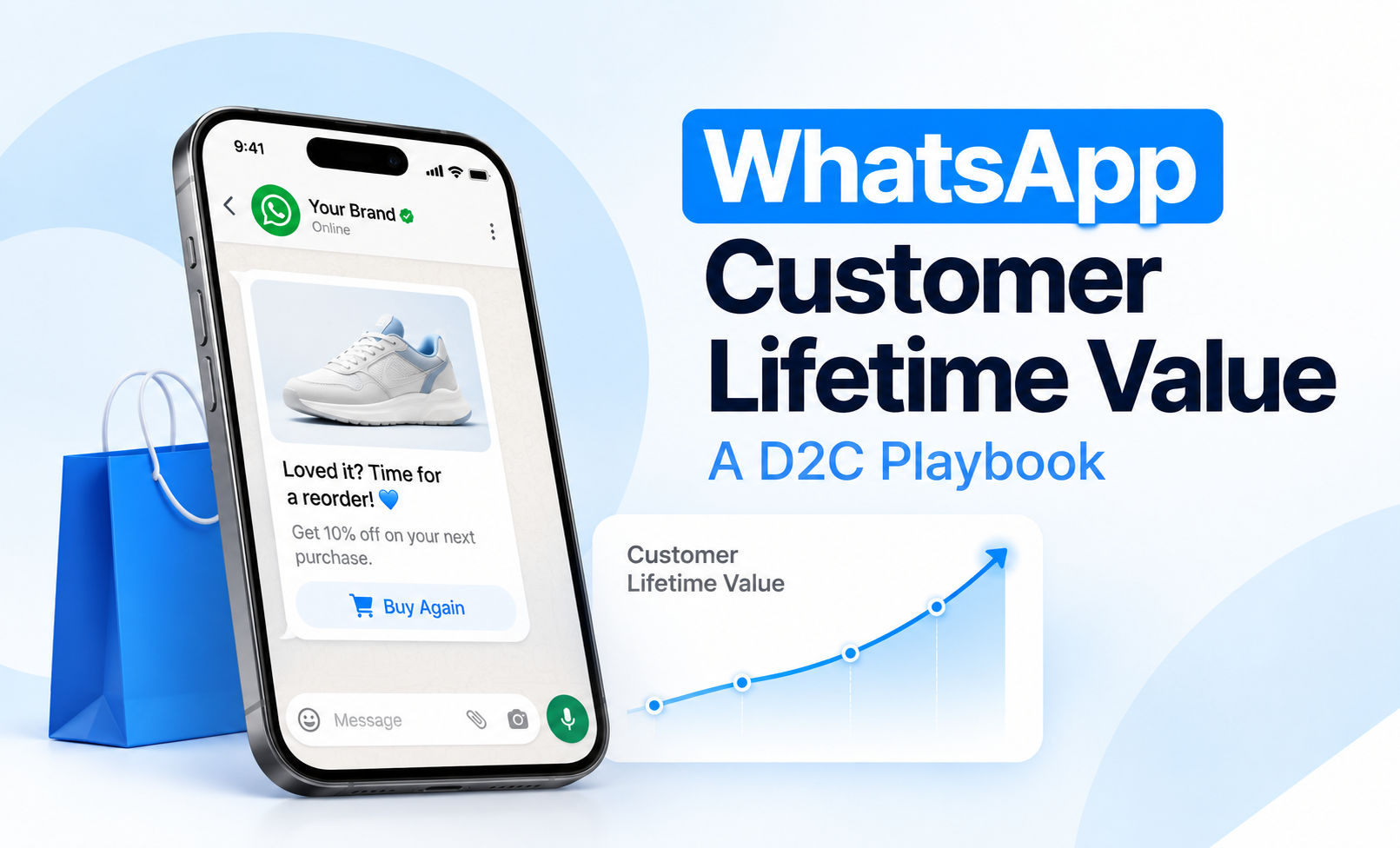
Customer Lifetime Value, or CLV, represents the total value a customer generates during their relationship with a brand.
For D2C businesses, WhatsApp can influence CLV through four main levers:
Purchase frequency: Help customers return and buy more often.
Average order value: Introduce relevant complementary products or higher-value options.
Customer lifespan: Maintain useful communication so customers stay active longer.
Reactivation: Bring previously active customers back before they are completely lost.
A strong WhatsApp CLV strategy connects these levers with customer behaviour, purchase history and timing.
Start With Post-Purchase Value, Not Another Offer
The first opportunity to improve lifetime value begins immediately after the first purchase.
A customer should first feel confident about the buying decision before the brand starts pushing another product.
A useful post-purchase approach includes:
Confirm the purchase clearly: Keep order, payment and delivery communication simple so the customer knows what to expect.
Help customers use the product better: Share relevant usage instructions, care tips or onboarding information that improves the product experience.
Reduce avoidable support friction: Make it easy for customers to ask questions when they face a problem.
Collect feedback at the right moment: Use customer responses to understand satisfaction before deciding what message should come next.
Good post-purchase experience increases the probability of a second purchase because trust is already being built.
Increase Repeat Purchase Frequency
For many D2C brands, the biggest CLV opportunity is getting customers to make the next purchase sooner and more consistently.
The timing should depend on the product category and normal consumption cycle.
A repeat-purchase strategy can include:
Replenishment reminders: Reach customers before the product is likely to run out.
Usage-based follow-up: Trigger communication based on how long the product normally lasts.
Back-in-stock alerts: Notify customers when products they previously purchased or showed interest in become available.
Repeat-order shortcuts: Reduce the effort required to buy the same product again.
The important part is to avoid sending the same reminder to every customer on the same schedule.
Customers should receive communication based on actual product and purchase behaviour.
Increase Average Order Value With Relevant Recommendations
Higher CLV can also come from increasing the value of each purchase.
WhatsApp can support this through personalised recommendations, but cross-selling should have a clear relationship with what the customer already purchased.
A useful approach is:
Identify the original purchase: Understand what the customer already owns or uses.
Find the logical next product: Recommend an item that complements, improves or extends the original purchase.
Keep choices limited: One or two relevant recommendations are usually more effective than a large catalogue.
Explain the connection: Tell the customer why the recommendation makes sense based on the previous purchase.
This moves the conversation from generic promotion to guided product discovery.
For businesses using WhatsApp more broadly across customer journeys, the WhatsApp Business API can support automated and personalised communication at scale.
Use Customer Segments Based on Value
Not every customer should receive the same retention treatment.
A D2C brand can create simple value-based segments using purchase behaviour.
Useful segments include:
New customers: Focus on product experience and confidence.
Repeat customers: Encourage replenishment and complementary purchases.
High-value customers: Offer priority access, loyalty benefits or exclusive launches.
At-risk customers: Identify declining purchase frequency and re-engage before they become inactive.
Inactive customers: Use relevant reasons to return rather than generic discounting.
This helps brands allocate attention based on customer potential rather than sending one campaign to the entire database.
Use Customer Data to Improve CLV Decisions
CLV improves when messaging decisions are based on customer data rather than assumptions.
Useful signals can include:
Purchase frequency
Average order value
Product categories purchased
Time since last purchase
Preferred variants
Response to earlier campaigns
Discount dependency
Customer feedback
Brands can also improve personalisation by collecting zero-party data on WhatsApp, where customers directly share preferences and interests.
This creates better inputs for future recommendations, reactivation and loyalty campaigns.
Reactivate Customers Before They Become Lost
Inactive customers can still contribute to lifetime value if reactivation happens at the right time.
A strong reactivation flow should be based on the normal buying cycle.
The process can include:
Identify meaningful inactivity: Define when a customer should be considered inactive for each product category.
Use previous purchase context: Reference products or categories the customer already knows.
Create a relevant reason to return: New launches, replenishment needs, improved products or useful offers can work better than generic discounts.
Reduce frequency after non-response: Repeated messages to disengaged customers can reduce trust and message quality.
Reactivation works best when the message feels connected to the customer’s history.
Track CLV Metrics, Not Just Campaign Metrics
WhatsApp campaigns should be evaluated based on their contribution to long-term customer value.
Useful metrics include:
Repeat purchase rate: Are more customers buying again?
Purchase frequency: Are customers buying more often?
Average order value: Is the value of each purchase increasing?
Reactivation rate: How many inactive customers return?
Customer lifespan: How long do customers remain active?
Revenue per customer: Is total customer value increasing over time?
A campaign can have strong click rates and still contribute very little to CLV.
The real question is whether WhatsApp helps the customer relationship become more valuable over time.
Build WhatsApp Around Customer Value
A strong WhatsApp CLV strategy for D2C brands should connect post-purchase experience, repeat buying, cross-sell, customer segmentation and reactivation into one lifecycle.
The goal is not to keep customers constantly engaged.
It is to make each interaction more relevant to where the customer is in the relationship.
When WhatsApp is used with the right customer data, timing and lifecycle logic, it can help D2C