
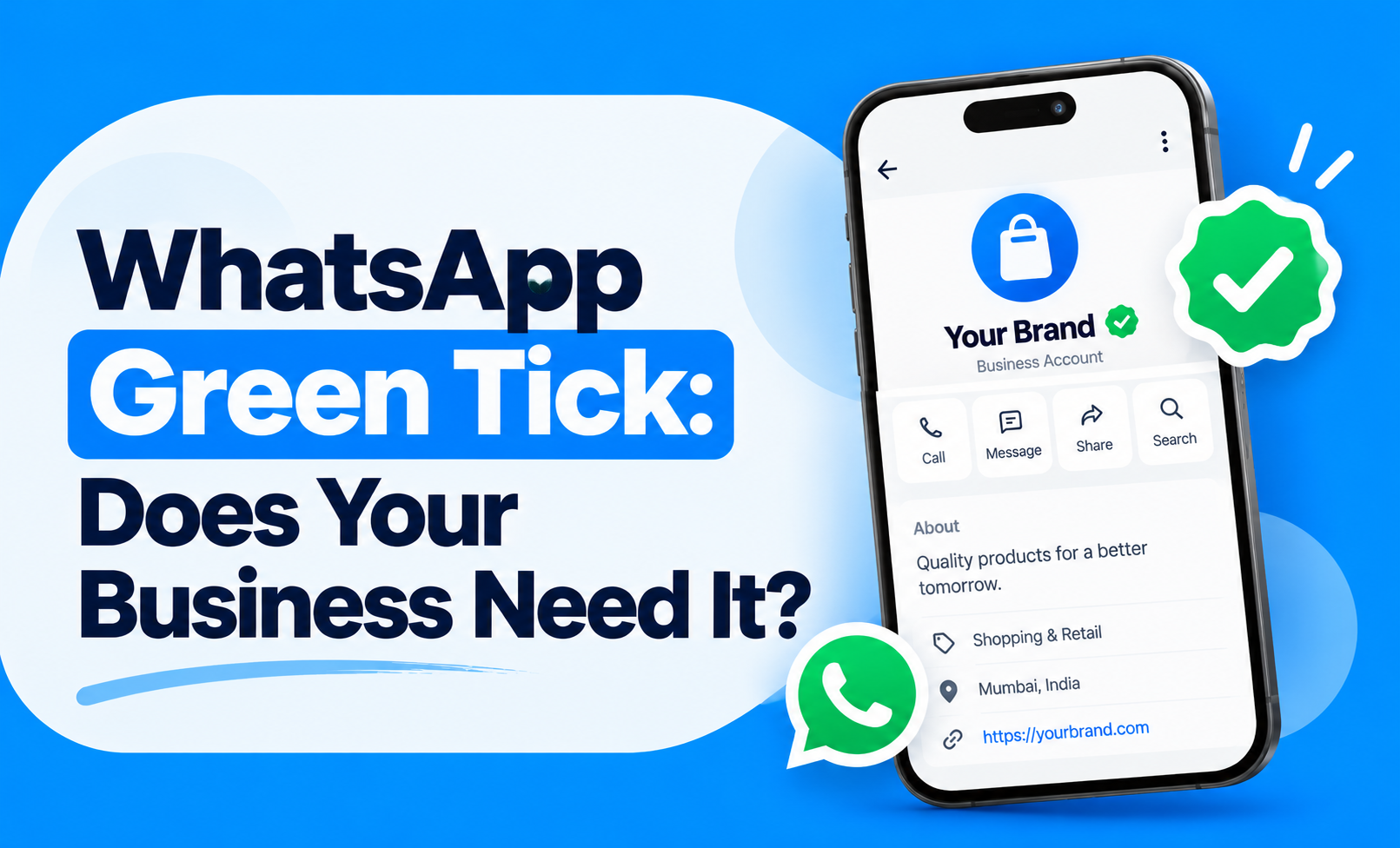
For years, businesses have searched for the WhatsApp Green Tick as a way to make their business account look more credible and official. The terminology has changed over time, and WhatsApp now uses verification concepts such as the verified badge, blue checkmark, Official Business Account and Meta Verified.
But the bigger question for a business is not simply “How do I get the WhatsApp Green Tick?”
It is:
Does my business actually need WhatsApp verification, and will it make a meaningful difference to customer communication?
For some businesses, a verified identity can strengthen trust when thousands of customers interact with the same WhatsApp number. For others, improving response quality, opt-in, automation and customer experience may matter far more than getting a badge.
Quick Concept
A WhatsApp verified badge helps customers identify that they are interacting with an authentic business presence. However, verification should be treated as a trust signal, not as a shortcut to higher sales, cheaper WhatsApp messaging or unlimited broadcasts.
Businesses should consider verification when:
Customers regularly need to confirm whether the WhatsApp number is genuine.
WhatsApp is becoming an important sales, support or notification channel.
The brand communicates with customers at significant scale.
Impersonation or fake accounts could create customer confusion.
Brand credibility matters before customers share information or take action.
If the business is still setting up basic WhatsApp communication, getting the underlying customer journey right may be more important than pursuing verification immediately.
When Does a WhatsApp Verified Badge Add Real Value?
Verification becomes more useful when the customer needs confidence before continuing the conversation. The value therefore depends on how WhatsApp fits into the business rather than simply on company size.
High-volume customer communication: Ecommerce, financial services, healthcare, education and service businesses may send large volumes of notifications or handle frequent customer enquiries. A recognisable business identity can make legitimate communication easier to identify.
High-value sales conversations: When customers are discussing expensive products, demos, property, enterprise services or long-term contracts, trust in the business identity matters before the conversation moves further.
Customer-service operations: Businesses using WhatsApp for order issues, appointments, account questions or post-purchase support benefit when customers can confidently recognise the official account.
Brands exposed to impersonation: Well-known brands or businesses operating in categories where fake accounts are common may gain additional value from a clear verified identity.
Businesses planning to use WhatsApp more broadly for automation, notifications, sales and service can first understand the capabilities available through the WhatsApp Business API.
What Does the WhatsApp Green Tick Not Do?
One of the biggest mistakes is treating verification as a performance feature. A verified badge can strengthen identity, but it does not fix poor messaging or weak customer experience.
Verification does not automatically:
Increase conversion rates: Customers still need a relevant offer, useful conversation and clear next step.
Reduce WhatsApp API costs: Verification status does not remove normal messaging charges.
Allow unlimited promotional messages: WhatsApp policies, consent requirements and messaging rules still apply.
Guarantee message engagement: Customers can still ignore irrelevant communication.
Fix poor account quality: Spam-like messages, unnecessary broadcasts and customer complaints remain problems.
Replace brand trust: A badge cannot compensate for an unclear website, inconsistent business information or poor support.
The badge should therefore support an already credible WhatsApp presence rather than being used to create credibility from nothing.
Green Tick, Blue Tick and Official Business Account: What Should You Know?
Businesses may still search for “WhatsApp Green Tick,” but current WhatsApp verification terminology has evolved. Understanding the route matters before deciding what your business needs.
Official Business Account: This is relevant to qualifying businesses using the WhatsApp Business Platform. Approval and verification are controlled by Meta.
Meta Verified: Eligible businesses may have access to Meta Verified, which provides a verified badge and associated business features depending on availability and account eligibility.
Meta Business Verification: This verifies business details within Meta’s ecosystem but should not automatically be treated as the same thing as obtaining the visible WhatsApp verified badge.
Standard business account: A business can still use WhatsApp effectively without having a visible verified badge.
If verification is the specific objective, read the detailed guide on how to get WhatsApp Blue Tick verification in India rather than treating older Green Tick terminology as the complete process.
Should a Small Business Apply for WhatsApp Verification?
A smaller business does not necessarily need to prioritise verification immediately. The decision should depend on how customers use WhatsApp with the business.
Verification may be worth considering when:
WhatsApp already generates meaningful customer conversations: The channel has become operationally important rather than experimental.
Customers frequently ask whether the number is official: This signals a genuine trust problem that verification may help address.
The business is increasing messaging volume: A stronger official identity becomes more relevant as customer reach expands.
The website and public brand presence are established: Customers can independently verify who the business is.
The business has proper messaging processes: Opt-in, support, templates and customer handling are already organised.
If these foundations are missing, fixing them usually deserves attention before the badge.
What Should You Fix Before Thinking About Verification?
A business should first make its complete WhatsApp presence trustworthy. Verification then becomes an additional signal rather than the only trust signal.
Focus on:
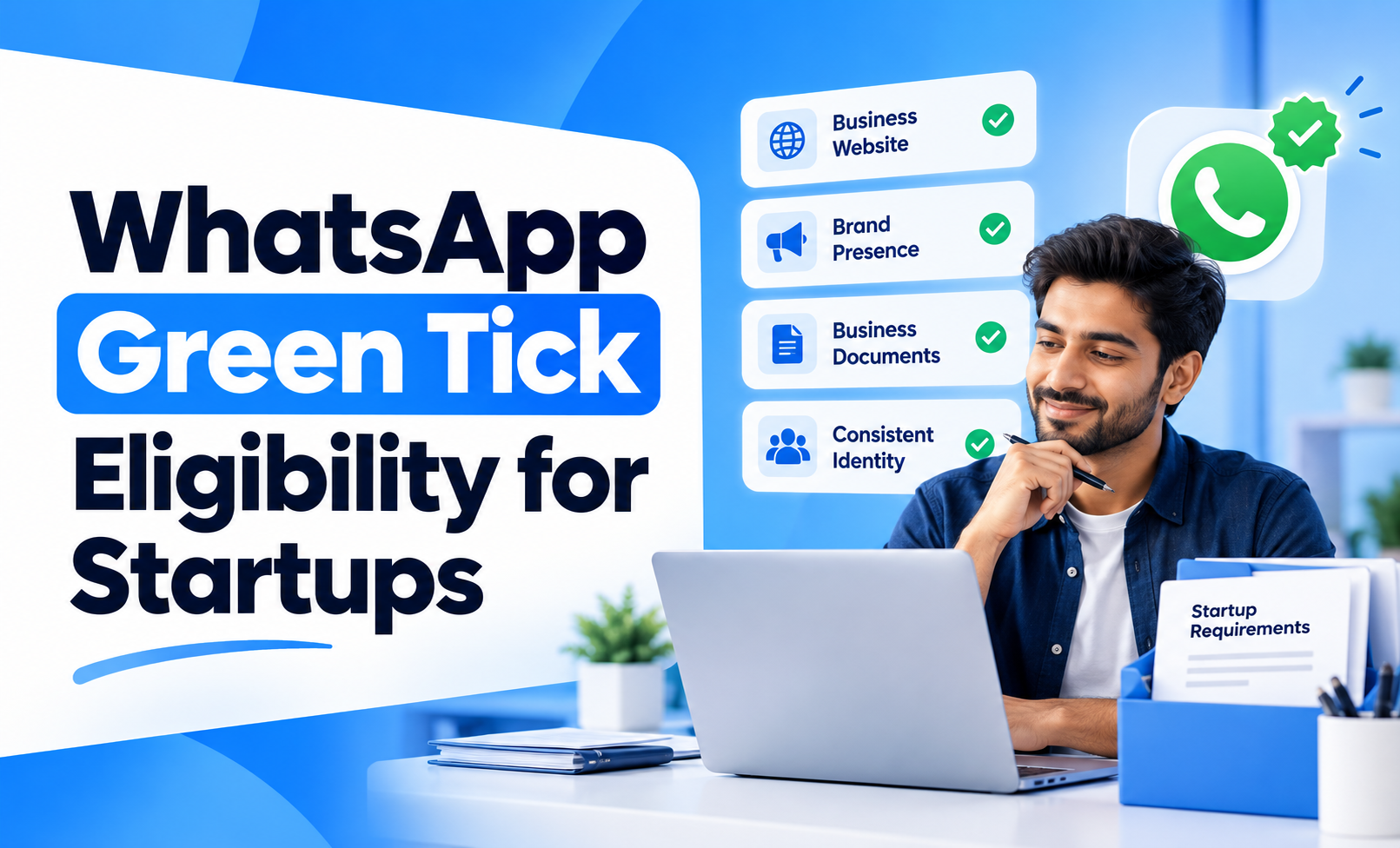
Consistent business identity: Keep the business name, website and public profiles aligned.
Complete WhatsApp profile: Use accurate business information and customer-facing details.
Clear website presence: Customers should be able to understand who the business is and how to contact it.
Proper customer consent: Build clear opt-in and opt-out processes for business messaging.
Relevant communication: Segment audiences instead of sending every message to everyone.
Reliable customer support: Make sure customers receive useful responses after they reply.
Also be cautious of any provider promising guaranteed verification. Meta controls the approval decision. EMOVUR’s WhatsApp API provider checklist explains why verification support and guaranteed approval are not the same thing.
Does Your Business Actually Need the WhatsApp Green Tick?
The answer depends on what problem you are trying to solve.
If customers already trust your account and WhatsApp is still a small communication channel, verification may not be the highest priority.
If WhatsApp has become a major customer-facing channel, customers need stronger identity assurance, or impersonation is becoming a concern, verification becomes more valuable.
The right approach is to build the foundation first: credible business identity, compliant messaging, useful customer communication and a reliable WhatsApp setup.
Then use verification as the additional trust layer it is meant to be—not as a substitute for the customer experience behind it.