

Before a customer replies to your message, asks a question or makes a purchase, they may first check your WhatsApp Business profile.
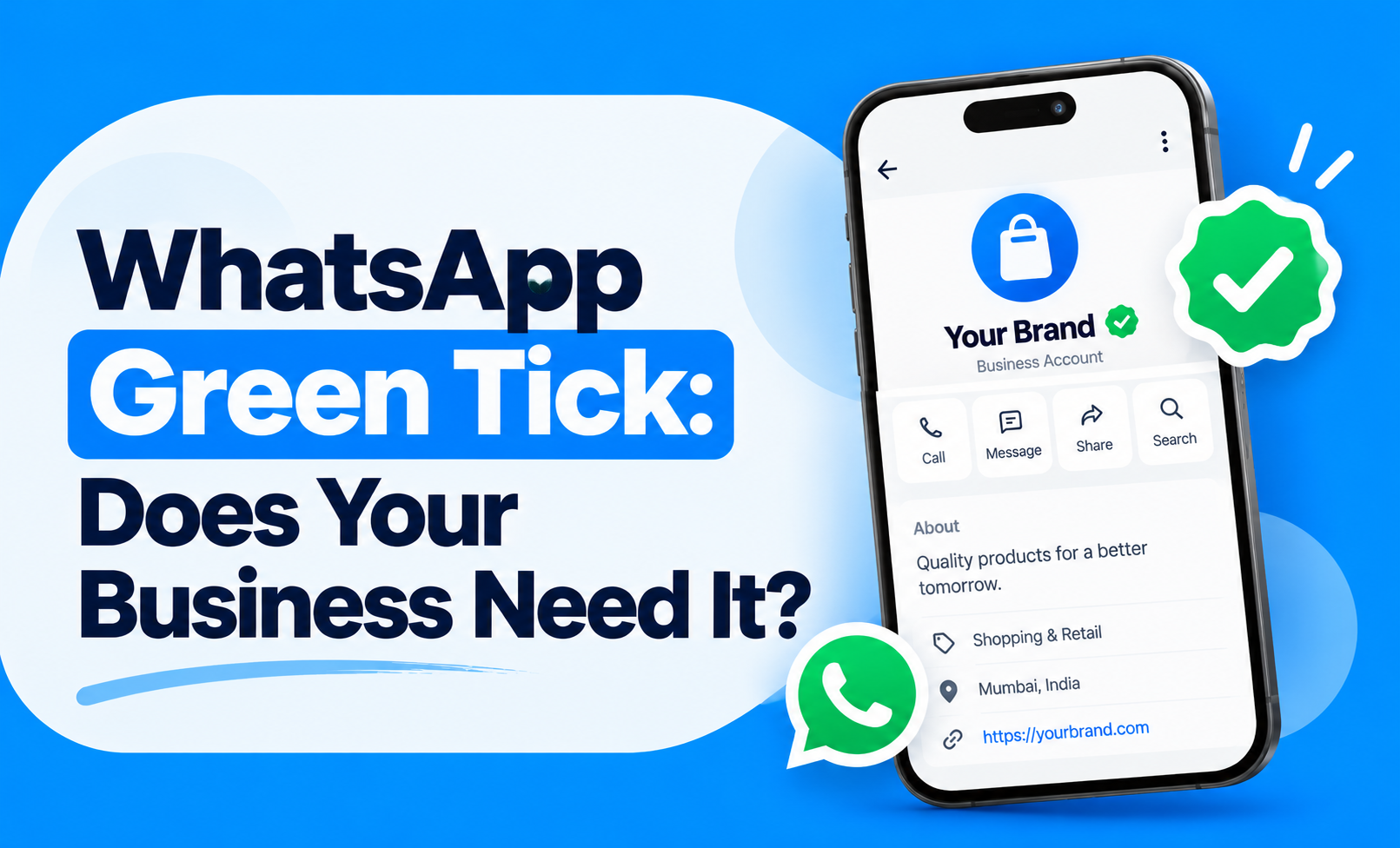
That profile acts like a small trust page inside WhatsApp. A clear business name, professional logo, accurate description, working website and complete business information can reassure customers that they are speaking with the right company.
A poorly completed profile can create the opposite effect. Missing details, inconsistent branding or unclear contact information can make even a legitimate business look unreliable.
Optimising your WhatsApp Business profile for trust is therefore not just a branding task. It is part of the customer experience.
Quick Concept
A trustworthy WhatsApp Business profile should make three things immediately clear:
Who you are: The customer should recognise the business without needing to ask.
What you do: Your description and category should explain the business clearly.
Where they can verify you: Website, business details and consistent branding should give customers a way to confirm your identity.
The objective is simple: reduce uncertainty before the conversation begins.
Use a Clear and Recognisable Business Name
Your business name is one of the first identity signals customers see. It should match the name they already recognise from your website, advertisements or other brand channels.
A strong business name setup should:
Use the actual brand name: Avoid adding unnecessary promotional phrases such as “Best Deals,” “No.1 Service” or keyword-heavy descriptions.
Remain consistent across platforms: The name used on WhatsApp should match the website, social profiles and other public business listings.
Avoid unnecessary abbreviations: If customers know the company by its full brand name, changing it on WhatsApp can create confusion.
Keep the name easy to recognise: Customers should immediately know which business they are communicating with.
Consistency strengthens trust because the customer sees the same identity across every touchpoint.
Use a Professional Profile Image
Your profile image should help customers recognise the brand immediately.
For most businesses, the official logo is the best option.
When setting the image:
Use the current brand logo: Avoid outdated versions or temporary campaign graphics.
Keep it readable at small size: WhatsApp displays profile images in a compact format, so detailed artwork may become unclear.
Avoid promotional text inside the image: Discounts, phone numbers and offers usually reduce clarity.
Use the same visual identity elsewhere: Customers should recognise the same logo on the website and other official channels.
The profile image should confirm identity, not try to carry the entire marketing message.
Write a Business Description That Builds Confidence
The description should explain what the company does without sounding like an advertisement.
Customers may use this section to quickly verify whether they have reached the correct business.
A useful description should include:
Core business activity: Clearly state what you provide.
Primary customer type: Mention who the service or product is relevant for where useful.
Location or market: Include this if geography is important to the business.
Clear language: Avoid vague claims such as “We provide the best solutions for everyone.”
Natural keywords: Use relevant terms where they improve understanding, not for keyword stuffing.
For example, a description such as:
“WhatsApp Business API platform for customer communication, automation and team-based messaging.”
is clearer than a long promotional statement filled with superlatives.
Businesses evaluating broader WhatsApp capabilities can explore the WhatsApp Business API to understand how business messaging can move beyond a basic profile.
Complete Your Contact and Business Information
Trust increases when customers can verify the business without leaving them with unanswered questions.
Complete the profile wherever the information is relevant.
Important details include:
Website: Link to the official company website, not an unrelated landing page.
Business email: Use a professional business email where possible.
Business category: Select the category that most accurately describes the company.
Address: Add the correct business location when customers may need to visit or verify it.
Working hours: Show customers when they can reasonably expect responses.
Business information: Keep every field current when contact details or locations change.
Incomplete or outdated information can create unnecessary doubt.
Make the Website and WhatsApp Profile Match
A customer may move between your WhatsApp profile and website before deciding whether to continue the conversation.
The information across both channels should therefore reinforce each other.
Check that:
Business names match: Avoid different company names unless there is a clear legal or brand reason.
Logos match: Customers should see the same visual identity.
Contact numbers are recognisable: The WhatsApp number should be connected naturally to the business.
Products and services are consistent: Do not describe a completely different offer on WhatsApp.
Location information matches: Address discrepancies can create distrust.
Website pages are functional: Broken or unfinished websites weaken the credibility created by a complete WhatsApp profile.
Trust is built through consistency across channels, not through WhatsApp alone.
Use the Catalogue Only When It Helps Customers
For product-based businesses, the WhatsApp catalogue can make the profile more useful by allowing customers to understand what is available before starting a long conversation.
A useful catalogue should:
Use accurate product names: Customers should easily understand what each item is.
Show clear images: Avoid low-quality or unrelated product visuals.
Keep pricing current: Incorrect prices can immediately damage trust.
Write concise descriptions: Explain the main product value without unnecessary detail.
Remove unavailable items: Avoid showing products that customers cannot actually purchase.
The catalogue should reduce questions, not create additional confusion.
Build Trust Through the First Message Too
Profile optimisation does not stop at profile fields. The first customer interaction should reinforce the credibility created by the profile.
A strong first-response experience should:
Acknowledge the customer clearly: Avoid robotic or confusing introductions.
Identify the business naturally: This is especially useful when the customer has arrived from an advertisement.
Set expectations: Tell customers when a human response may take time.
Keep automation transparent: Do not make automated replies pretend to be human.
Provide a useful next step: Help the customer understand what information to share or what they can do next.
If businesses use automation for first-contact conversations, the focus should remain on clarity rather than adding unnecessary chatbot steps.
Review the Profile Regularly
A WhatsApp Business profile should not be completed once and forgotten.
Review it whenever there is a meaningful business change.
Check:
Business name and branding
Website URL
Address
Business hours
Email
Description
Catalogue information
Product availability
Even small outdated details can create friction when customers are trying to verify the business.
Trust Starts Before the Conversation
A well-optimised WhatsApp Business profile does not guarantee a sale, but it removes avoidable doubts.
Customers should be able to understand who the business is, what it does and where they can verify it within a few seconds.
That makes the profile an important part of the broader WhatsApp customer journey.
Businesses considering additional identity signals can also read Get WhatsApp Business Verified in India to understand when formal verification may become relevant.
The strongest approach is to build trust in the right order:
Clear identity first. Consistent information second. Useful customer communication third. Verification after that, where it adds value.