

WhatsApp Utility Message Pricing in India: Rates, Examples & Cost Rules:
If you're trying to estimate WhatsApp utility message pricing in India, the number to start with is the current Meta rate for a delivered Utility message, not an old conversation fee.
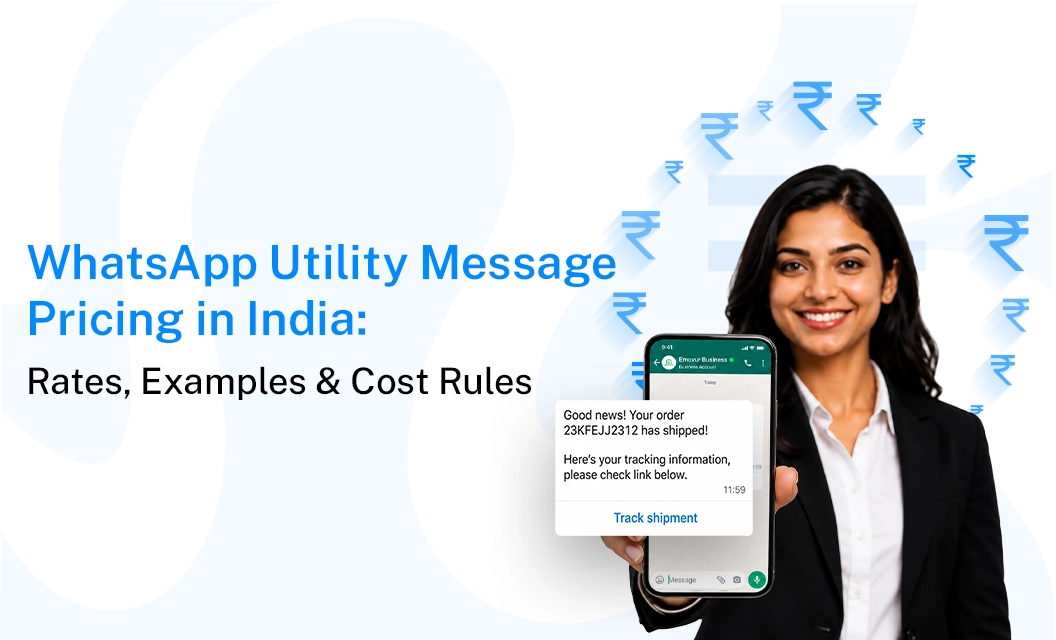
Utility messages are designed for functional updates linked to something the customer has already done or requested, such as an order confirmation, payment receipt, appointment reminder or delivery update. The important part is that the message must remain genuinely transactional. Adding promotional content to a Utility template, Meta classifies it as a Marketing message, which can change the applicable rate significantly.
What Actually Qualifies as a "Utility" Message?
You can’t simply label a template as Utility and expect Meta to accept it. Every template is reviewed during approval, and Meta determines its category based on the message's actual content and purpose. A Utility message must relate to a specific transaction, request or activity the customer has already initiated or is directly involved in.
Think:
Order confirmations and shipping updates
Payment receipts and billing reminders
Appointment or booking confirmations
Delivery status changes
Subscription renewal notices (not upsell — just the renewal itself)
Account or service alerts (e.g., "your recharge is expiring")
If you want to see how Meta's template review actually behaves in practice, it's worth browsing through Emovur’s WhatsApp message templates before you submit anything.
Current WhatsApp Utility Message Rates in India (2026)
Here's Meta's rate card for India, effective July 1, 2026, per message delivered:
A few things worth flagging that most pricing pages gloss over:
You're only charged for delivered messages: If it fails to deliver, Meta doesn't bill it.
GST is on top of Meta's rate: and your BSP (the platform you send through, like a CPaaS provider) usually adds its own per-message or monthly platform fee on top of that.
Meta's per-message rate is identical no matter which BSP you use: The rate itself isn't negotiable — what differs between providers is the platform fee layered on top. If you're comparing vendors, this WhatsApp API pricing in India breakdown separates Meta's charge from the platform markup, which makes the comparison a lot less confusing than the vendor pages that quote a single blended number.
Here's the part that matters for anyone building a 2027 budget: this changes on October 1, 2026.
Meta has confirmed that, from October 1, 2026, Utility templates sent within the 24-hour customer service window will be charged at the standard per-message rate, currently ₹0.1150 for India. Non-template service replies, such as free-form messages sent by an agent or chatbot, will also become chargeable on the same date after being free since November 2024.
For businesses that have relied on the 24-hour service window to send Utility messages at no additional Meta messaging cost, this change could introduce a new recurring expense from October onward. Businesses with high volumes of order updates, delivery notifications, appointment reminders, or similar Utility messages should therefore review their expected messaging volume and costs before the new pricing takes effect.
If you want to compare the broader WhatsApp cost structure—not just the Utility message rate—read our WhatsApp API pricing guide.
How Different Businesses Use WhatsApp Utility Messages
The use case changes from industry to industry, but the principle stays the same: the message should serve a functional purpose linked to an existing customer action.
Important: The examples in this article are intended to illustrate common use cases for WhatsApp Utility messaging and should not be treated as a guarantee of how Meta will classify a specific template.
Utility Message Pricing: A Simple Cost Calculator
Calculating your WhatsApp Utility message cost is straightforward: take the number of delivered Utility messages you expect to send and multiply it by Meta’s current Utility rate for India.
Example
You send: 20,000 delivered Utility messages/month
India Utility rate: ₹0.115 per message
20,000 × ₹0.115 = ₹2,300/month
So, at the current rate, delivering 20,000 Utility messages would result in approximately ₹2,300 in Meta messaging charges.
Estimated Monthly Cost
These figures are useful for estimating your Meta messaging cost based on delivered Utility messages. Your actual WhatsApp expenses may be higher if your WhatsApp API provider applies separate platform, software, or service charges.
Formula: Delivered Utility messages × Current India Utility rate = Estimated Meta messaging cost
Final Takeway:
WhatsApp Utility message pricing is straightforward once you separate two things: what Meta charges and what Meta considers Utility. For Indian businesses, the current verified rate is the starting point for calculating delivered-message costs, but classification matters just as much.
A genuine order update, payment confirmation or appointment reminder can remain Utility; add promotional intent, and the economics can change. Because Meta continues to update its pricing rules, businesses should also check the latest rate before forecasting campaign costs—especially ahead of the October 2026 changes
FAQs
Is a WhatsApp utility message really free in India right now?
Only inside specific windows — if it's sent within 24 hours of the customer's last message, or within 72 hours of them arriving via an ad click. Outside those windows, it's ₹0.115 per message. From October 1, 2026, even in-window utility templates will be billed.
Why did my utility template get reclassified as Marketing?
Almost always because promotional language slipped in — a discount, an upsell, or "shop now" phrasing. Meta reviews content, not intent, so even a transactional message with one promotional line gets moved to the pricier category.
Does GST apply on top of the ₹0.115 utility rate?
Yes. Add 18% GST on Meta's charge, and then your BSP's own fee (per-message or monthly platform fee) on top of that — the ₹0.115 is only Meta's cut.
Are OTP messages priced the same as utility messages?
For domestic Indian numbers, yes — both are ₹0.115. Authentication messages to international numbers are priced much higher, around ₹2.30, since that rate is set per recipient country.
What's changing on October 1, 2026?
Utility templates and free-form service replies sent inside the 24-hour customer service window — currently free — will start being billed at the standard per-message rate. This ends a free window that's been in place since July 2025 (for utility) and November 2024 (for service messages).
If you're comparing WhatsApp costs for your business, review Emovur's current WhatsApp API pricing in India and calculate the cost around your actual monthly message volume.
TABLE OF CONTENTS