


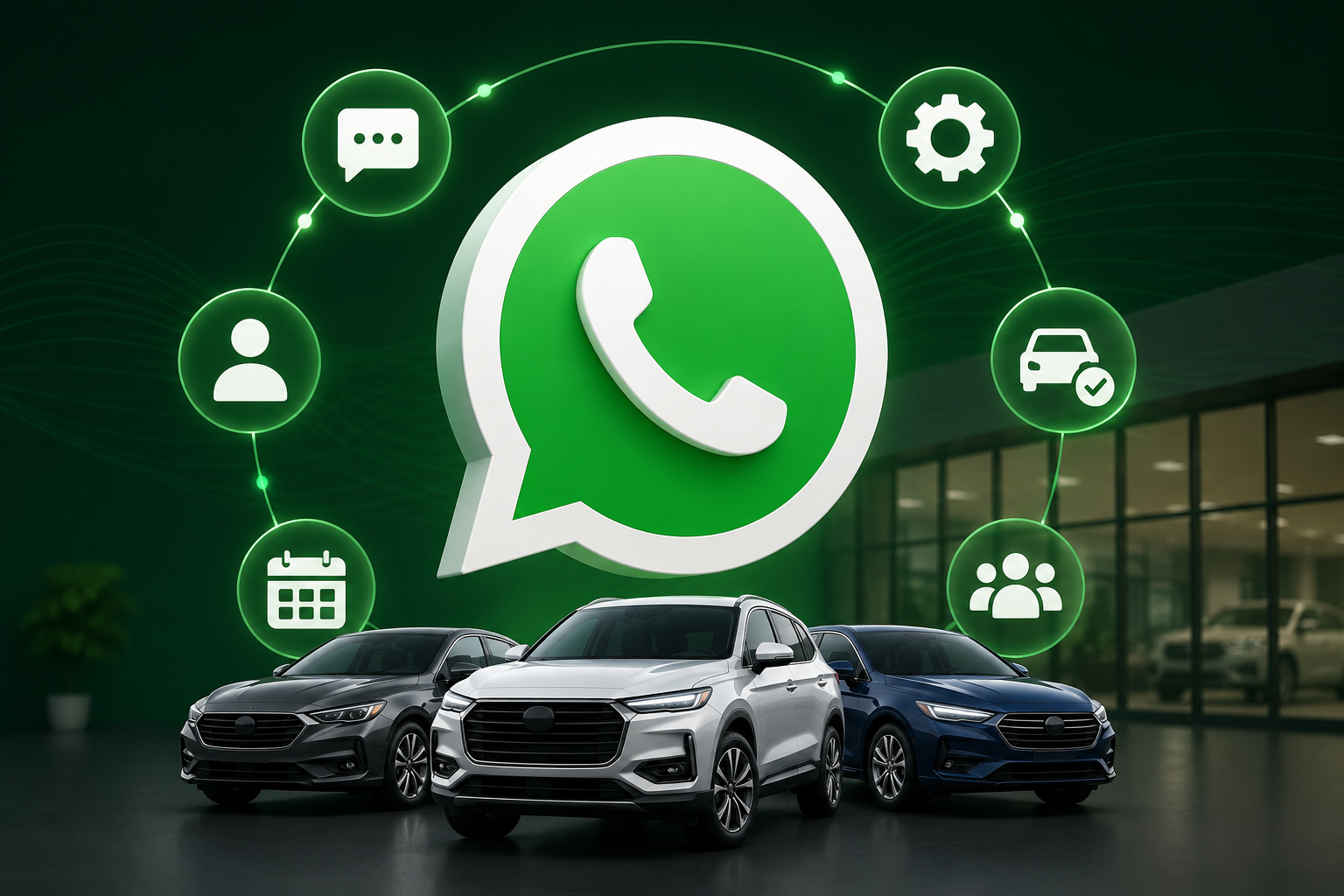
Quick Framework: Where WhatsApp Automation Fits in a Dealership Journey
Automotive dealerships do not usually struggle only because they have fewer leads. The bigger problem is often what happens after the lead arrives: slow replies, missed follow-ups, scattered conversations, manual test drive coordination, and weak after-sales communication.
Here is how WhatsApp automation can support different parts of the dealership journey when it is planned properly.
This article is written for Emovur and discusses WhatsApp automation from an automotive dealership use case. It does not promise guaranteed bookings, sales, response rates, or revenue. Actual results depend on lead quality, offer strength, dealership process, team follow-up, customer consent, template approval, and campaign execution.
The WhatsApp Business Platform is designed to help businesses connect with customers through business messaging, and Meta documentation explains that businesses can use templates and platform APIs for structured messaging. This matters because dealership automation should be built around approved, compliant, and useful customer conversations - not random blasts.
Sources: WhatsApp Business Platform | Meta WhatsApp message templates
Dealerships Do Not Just Lose Leads. They Lose Timing.
An automotive lead can look simple inside a CRM: name, phone number, car model, location, enquiry source, and date.
But to the customer, that same enquiry is not just a data entry. It is a buying moment.
The customer may be comparing two models, checking finance options, waiting for a showroom callback, asking family members, or deciding whether the offer is worth a visit. If the dealership responds late or follows up poorly, the lead does not always look lost immediately. It slowly becomes cold.
That is where WhatsApp automation becomes useful for automotive dealers. It helps the dealership respond faster, continue the conversation, simplify test drive booking, remind customers at the right time, and keep the relationship alive after vehicle delivery.
In real dealership journeys, the damage often happens between lead generation and human follow-up. A customer may enquire from an ad, listing platform, website form, or social media post, but the sale depends on how quickly and clearly the dealership continues the conversation.
The New Dealership Conversation Starts Before the Sales Call
Modern buyers often want simple answers before they speak to a sales representative. They want to know whether the model is available, what variants exist, whether finance is possible, whether a test drive can be scheduled, and whether there is a current offer.
If each answer needs a manual callback, the buyer journey becomes slower than it needs to be. WhatsApp gives dealerships a familiar channel where the first layer of communication can happen quickly while still allowing a sales executive to step in when the buyer is ready.
A good automation system should not make the dealership feel robotic. It should remove the repetitive delay and help the human team focus on better conversations.
Is this model currently available?
What is the on-road price or expected price range?
Can I book a test drive?
What finance or exchange options are available?
Do you have any current offers?
Can someone call me at a specific time?
WhatsApp automation should be designed around the buyer journey, not around a generic chatbot script. The right flow depends on model interest, dealership location, buyer intent, inventory stage, and whether the next best action is a test drive, finance discussion, offer follow-up, or service reminder.
Before Automating, Map the Dealership Journey
Many dealerships start automation from the wrong point. They ask, "What messages should we send?" The better question is: "Where are customers currently getting delayed, ignored, confused, or dropped?
Automation should be introduced only where it improves clarity or speed. It should not be used to spam customers, bypass consent, hide pricing, or replace necessary human support.
Step 1: Turn Every Enquiry Into an Instant WhatsApp Conversation
The most common mistake dealerships make is treating an enquiry as a CRM record first and a customer conversation second.
When a buyer submits a form, clicks an ad, scans a QR code, or asks for vehicle details, the first response should not wait for the next manual follow-up cycle. An instant WhatsApp message can confirm the enquiry, ask what the buyer wants next, and guide the buyer toward the right action.
With Emovur, dealerships can use WhatsApp Business API-powered automation to support customer conversations, broadcasts, chatbot flows, and automated journeys for business messaging use cases.
A first-response automation can help the dealership:
Share model information instantly.
Show available variants, locations, or next steps.
Collect preferred model, budget, exchange requirement, and city.
Route hot leads to the sales team faster.
Answer basic questions before a sales executive joins the conversation.
The first few minutes after enquiry are often the highest-intent part of the journey. A slow or unclear response can make a serious buyer move to another dealer, even if the original campaign generated the lead correctly.
Source: Emovur WhatsApp Business API
Step 2: Remove Friction From Test Drive Scheduling
A test drive is one of the strongest buying signals in the automotive journey. Still, many potential buyers do not schedule one because the process feels longer than it should.
They may need to call the showroom, wait for confirmation, check slot availability, explain the model again, or follow up with a different executive. Every extra step can weaken the intent.
WhatsApp automation can simplify this by giving the customer a guided path to book or request a test drive without repeated manual coordination.
Customers can be guided to:
Select the vehicle model or variant.
Choose the showroom or preferred location.
Pick a convenient date and time slot.
Confirm their details before the visit.
Receive reminders before the scheduled appointment.
This does not remove the need for a sales team. It gives the sales team a better-qualified appointment to handle.
A strong test drive automation flow should connect enquiry source, model interest, showroom location, calendar availability, and confirmation reminders. The goal is not only to book a slot, but to make the visit easier for both the buyer and the dealership.
Step 3: Prevent Lead Leakage With Automated Follow-Up
Not every automotive buyer makes a decision immediately. Some buyers compare brands. Some wait for salary dates. Some discuss finance. Some are interested but not ready. Some want a specific colour, variant, or offer.
Many dealerships lose these leads because manual follow-up stops after the first few attempts. The buyer is not always uninterested. The dealership may simply disappear from the buyer's consideration set.
Automated WhatsApp follow-ups help dealerships remain present without depending only on manual reminders from individual sales executives.
Useful follow-up triggers can include:
New arrival updates for a model the buyer asked about.
Price change or limited-period offer alerts.
Finance assistance reminders.
Exchange evaluation prompts.
Test drive reminder for customers who showed interest but did not book.
Follow-up after showroom visit or test drive.
Automated follow-up should be segmented and relevant. A buyer who asked about a compact hatchback should not receive every SUV, luxury vehicle, or unrelated offer just because the number is available in the database.
Step 4: Increase Service Revenue With Timely Reminders
For automotive dealerships, the customer relationship should not end after vehicle delivery. Service reminders, warranty updates, insurance renewal prompts, accessory offers, and periodic check-ins can create recurring revenue opportunities.
The problem is that many after-sales reminders are still scattered across calls, SMS, spreadsheets, or manual service team follow-up. Some customers miss the message. Some ignore calls. Some delay service because the reminder did not feel immediate or useful.
WhatsApp automation can help dealerships send timely, structured reminders and make it easier for customers to respond or request a service slot.
Automated reminders can support:
Periodic service reminders.
Warranty renewal or expiry alerts.
Insurance renewal reminders.
Accessory replacement or upgrade prompts.
Feedback collection after service completion.
Rebooking prompts for missed service appointments.
Meta describes utility templates as messages typically sent in response to a user action or request, such as confirmations or updates. Service and renewal communication should be planned carefully according to current WhatsApp template categories, consent requirements, and applicable policies.
Sources: Meta utility templates | WhatsApp Platform pricing
Step 5: Use Offers Without Turning WhatsApp Into Spam
Dealership offers can work well when they are relevant. They can also damage trust when every customer receives the same promotional message regardless of need, model interest, city, or purchase stage.
The smarter approach is to use audience segmentation. A buyer who enquired about a specific model, a customer nearing insurance renewal, a past buyer eligible for an upgrade, and a lead waiting for price movement should not receive the same campaign.
Emovur's WhatsApp broadcast and automation capabilities can help businesses create broadcasts, segment audiences, automate responses after replies, schedule campaigns, retarget based on interactions, and track campaign performance.
Campaign performance usually improves when the message matches customer intent. Segmentation, tagging, opt-in quality, creative clarity, and follow-up handling are more important than simply sending more messages.
Source: Emovur WhatsApp Broadcast
Step 6: Build Lifetime Customer Retention After Delivery
A vehicle buyer can become more than a one-time customer. They can return for service, buy accessories, renew insurance, recommend the dealership, leave a review, refer family members, and consider the same dealership for the next vehicle.
But retention does not happen automatically. It needs consistent, useful communication after delivery.
WhatsApp automation can help dealerships continue the relationship in a way that feels helpful instead of forced.
Post-delivery automation can include:
Delivery confirmation and thank-you message.
Vehicle care tips for the first few weeks.
First service reminder.
Customer feedback request.
Review or referral prompt.
Insurance and warranty renewal reminders.
Upgrade or exchange communication when relevant.
Dealerships that stay connected after delivery often create more future opportunities than dealerships that depend only on new leads every month. Customer retention, referrals, reviews, and after-sales service can support long-term growth.
What Should Be Automated and What Should Stay Human?
WhatsApp automation works best when it supports the team rather than replacing the team. Automotive sales still needs trust, explanation, negotiation, finance clarity, and human confidence.
A good automation setup should make it easy for customers to reach a real person. If automation traps the buyer inside irrelevant options, it creates frustration instead of conversion.
What Fast-Growing Dealerships Do Differently
Fast-growing dealerships do not depend only on more ad spend. They improve the system that receives, qualifies, follows up, and retains the leads they already generate.
They do not leave every enquiry to scattered manual follow-up. They create a repeatable communication process where every lead is acknowledged, every interested buyer is guided, every test drive request is easier to complete, and every customer receives timely after-sales communication.
That is the real value of WhatsApp automation for automotive dealers. It brings consistency to moments where dealerships usually depend on memory, speed, and individual discipline.
Emovur positions its WhatsApp Business API product for businesses that want to send broadcasts, build chatbots, automate customer journeys, and manage customer communication through WhatsApp Business API. For dealerships, these capabilities should be mapped to lead follow-up, test drive scheduling, offer campaigns, and service reminders.
Source: Emovur WhatsApp Business API
Red Flags Before Starting WhatsApp Automation for a Dealership
Be careful if an automation plan is built around only bulk messaging. Dealership automation should improve the customer journey, not just increase message volume.
Watch out for these mistakes:
Sending the same offer to every contact without segmentation.
Using automation without clear customer opt-in and policy checks.
Not connecting WhatsApp leads to the sales or CRM workflow.
Not routing high-intent buyers to human sales executives quickly.
Not tracking which campaigns, test drive flows, or reminders create action.
Using unclear messages that do not tell customers what to do next.
Ignoring after-sales communication after vehicle delivery.
No responsible WhatsApp automation provider should position spam as a growth strategy. Sustainable messaging depends on consent, relevance, timing, clarity, and proper handling of customer responses.
Questions to Ask Before Choosing a WhatsApp Automation Setup
Before choosing a WhatsApp automation solution for an automotive dealership, ask:
Can we connect enquiry sources such as website forms, ads, CRM, and listing platforms?
Can we segment leads by model, location, budget, source, and intent?
Can customers book or request test drives through WhatsApp?
Can the system route hot leads to the right sales executive or team inbox?
Can we send approved templates for reminders, offers, and follow-ups?
Can we track replies, clicks, campaign engagement, and appointment requests?
Can the sales team take over the conversation when needed?
How will opt-ins, template approvals, and policy compliance be handled?
Can we automate service reminders and post-delivery customer journeys?
What reports will show whether automation is actually improving follow-up quality?
The best setup is not only a WhatsApp number connected to automation. It is a journey design that connects enquiry capture, segmentation, template planning, team routing, reporting, and follow-up ownership.
FAQs
Is WhatsApp automation useful only for car sales?
No. It can support new vehicle enquiries, used vehicle enquiries, test drive scheduling, finance assistance, service reminders, insurance renewals, warranty communication, customer feedback, and referral campaigns.
Can test drive booking be automated on WhatsApp?
Yes, a dealership can use a guided WhatsApp flow to collect model preference, location, date, time, and contact details. A team member can then confirm or manage the appointment depending on dealership process.
Does WhatsApp automation replace the sales team?
No. It should reduce repetitive work and improve response speed. Sales executives are still important for negotiation, finance discussion, exchange valuation, objections, and final booking conversations.
Can dealerships send offers on WhatsApp?
Yes, but offer messages should be relevant, segmented, consent-based, and aligned with current WhatsApp Business Platform policies and template requirements.
What should automotive dealers automate first?
Start with instant enquiry response, lead qualification, test drive scheduling, follow-up reminders, and service reminders. These areas usually create immediate process clarity without overcomplicating the setup.
Automotive dealerships do not need automation because human sales teams are unimportant. They need automation because customer journeys move faster than manual follow-up systems can consistently handle.
WhatsApp automation helps dealerships respond faster, guide buyers better, reduce lead leakage, simplify test drive scheduling, send timely service reminders, and stay connected after delivery.
The goal is not to send more messages.
The goal is to send the right message at the right moment, then make it easy for the customer to take the next step.
When planned properly, WhatsApp automation can turn dealership communication from scattered follow-up into a structured customer journey.
The right WhatsApp automation system should help the dealership make follow-up more consistent and customer-friendly. It should not pressure customers, overpromise outcomes, or create irrelevant campaigns.
Ready to Automate Dealer Follow-Up With Emovur?
Emovur helps businesses use WhatsApp Business API to manage customer conversations, build automation flows, run broadcasts, support team replies, and improve customer engagement journeys.
If your dealership wants to reduce missed follow-ups, simplify test drive scheduling, send service reminders, and create better post-delivery communication, Emovur can help you plan the right WhatsApp automation journey.
TABLE OF CONTENTS
Grow every location with Emovur
Practical playbooks and product ideas for multi-location businesses — WhatsApp, CRM, reviews, and social, all in one platform.
Explore EmovurRelated reads
Get local marketing tips, straight to your inbox
One short email a fortnight. No product pitches.